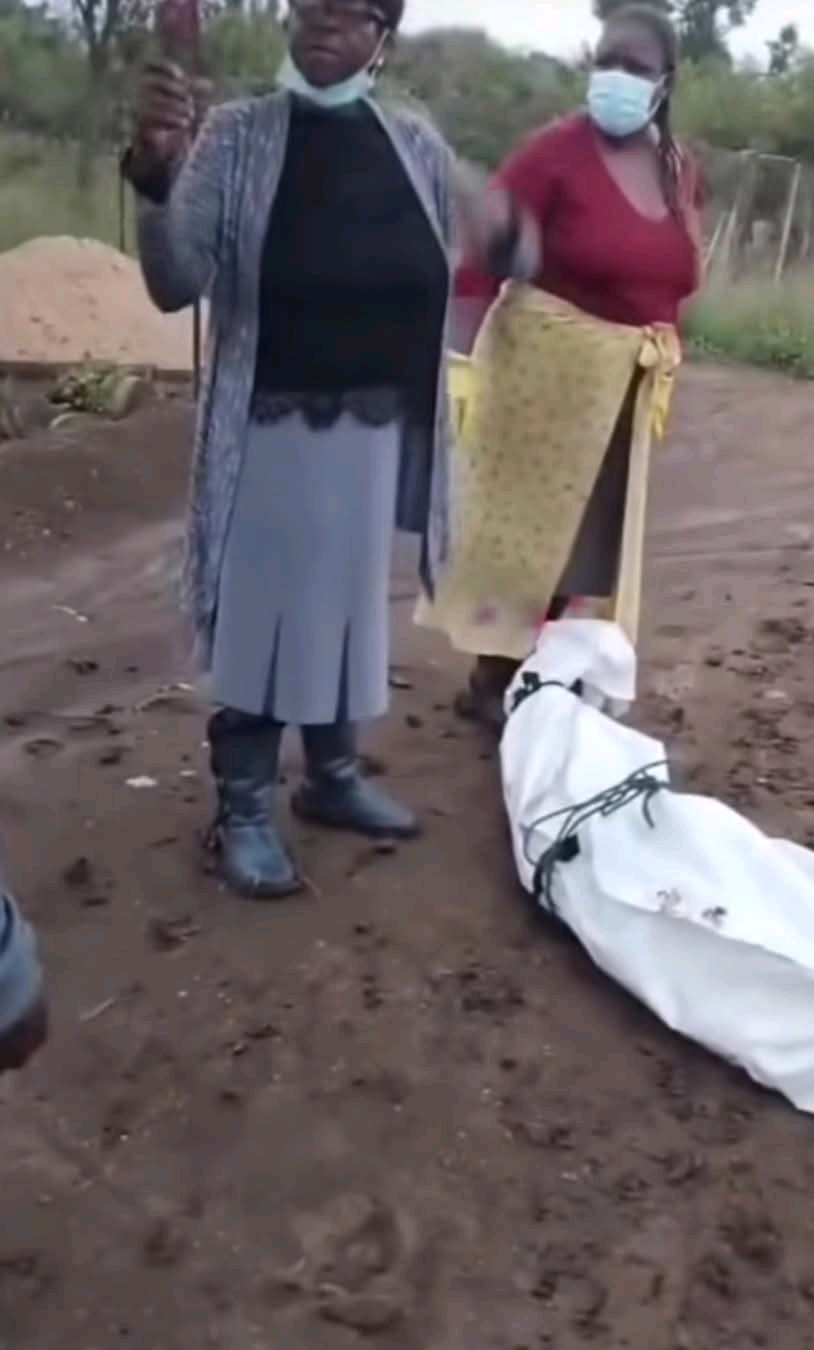
A heartbreaking incident in rural Tzaneen has drawn national attention after a family was forced to carry the body of their deceased relative on foot when the hearse transporting the remains became stuck on a badly damaged gravel road. A video of the incident, which has since gone viral, shows relatives lifting the body — wrapped carefully in a cloth — and walking the remaining distance to their home while visibly distraught community members watch on.
According to witnesses, the hearse was unable to proceed because heavy rain had severely eroded the road leading into the village. Deep potholes, loose soil, and washed-out sections made the path impassable for the funeral vehicle. Despite repeated attempts by the driver to maneuver through the damaged terrain, the hearse became lodged and could not move forward. With no alternative vehicle available and the burial already scheduled, the grieving family had no choice but to take matters into their own hands.
The circulating video shows a mix of sorrow and frustration from residents. Some can be heard questioning how such a painful situation could occur in modern South Africa, while others plead for immediate government intervention. Several people in the crowd express outrage that the family’s mourning was intensified by conditions that they believe could have been avoided.
Local residents say the road has been in a poor state for years, with repeated promises of repair from municipal authorities but little visible progress. The latest heavy rains only worsened the condition of an already deteriorating route — a reality that has long affected ambulances, school transport, and everyday travel. For many, this tragic moment has now become the clearest demonstration of how neglected infrastructure can strip a family of dignity during one of life’s most vulnerable moments.
Social media users have also expressed widespread anger, calling the situation “inhumane” and “unacceptable.” Many commented that rural communities continue to suffer due to chronic service delivery failures, urging authorities to prioritise safe and accessible roads. Some users shared personal experiences of ambulances and delivery trucks being unable to reach their homes, reinforcing that this is not an isolated case but part of a wider, systemic issue.
Community leaders have echoed these sentiments, insisting that the incident should serve as a wake-up call for municipal and provincial departments. They argue that reliable road infrastructure is not a luxury — it is a necessity that affects healthcare access, emergency services, transportation, and even how families honour their deceased loved ones.
For the affected Tzaneen family, what should have been a solemn and dignified moment of mourning turned into an emotionally distressing ordeal. As they proceed with funeral arrangements, residents hope the visibility of this tragedy will finally prompt lasting action. Many believe that no family should ever again face the pain of carrying a loved one home because a hearse cannot reach them.
About the Author