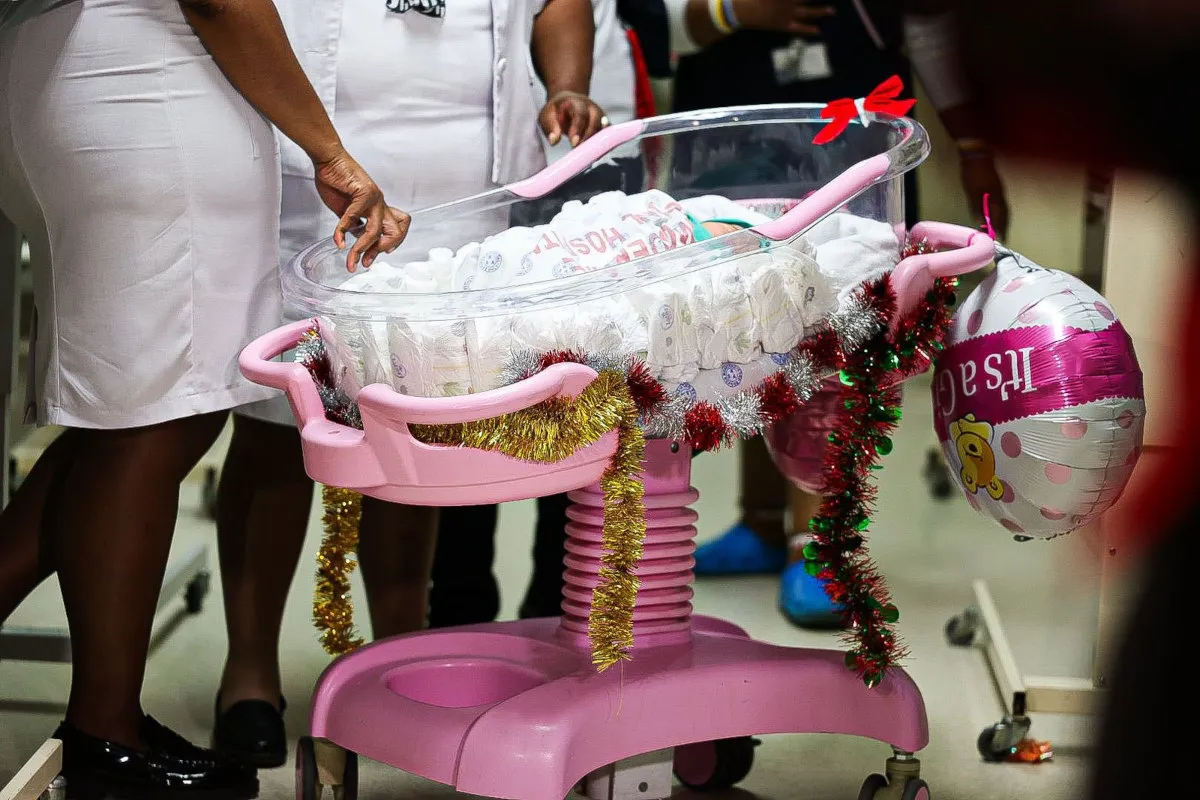
Health authorities across South Africa have expressed deep concern after dozens of underage girls were recorded among mothers who gave birth on Christmas Day, highlighting the country’s ongoing teenage pregnancy crisis. National figures released by the Department of Health show that more than 30 teenage mothers were among the 714 babies born in public health facilities between midnight and midday on 25 December, with some mothers as young as 15 years old.
The department described the situation as “deeply troubling”, noting that teenage motherhood places enormous emotional, social and economic pressure on young girls who are still navigating adolescence. National Department of Health spokesperson Foster Mohale said the continued rise in teenage pregnancies reflects a broader societal failure that requires urgent intervention.
“Teenage mothers are often forced to take on adult responsibilities while still being children themselves,” Mohale said. “The presence of girls as young as 15 among Christmas Day births is a serious concern and highlights the need for stronger prevention strategies.”
In the Eastern Cape, Health MEC Ntandokazi Capa revealed that nearly 20 of the 70 mothers who gave birth on Christmas Day were teenagers between the ages of 15 and 19. She emphasised that cases involving underage mothers are not treated lightly and are subject to mandatory reporting.
“When a 15-year-old presents at a health facility in labour, the law requires us to report the matter to the Department of Social Development and the South African Police Service,” Capa said. She added that the province would intensify its collaboration with law enforcement and social services to ensure that vulnerable children are protected and that possible criminal cases are properly investigated.
KwaZulu-Natal also recorded worrying figures. By mid-morning on Christmas Day, at least 70 babies had been delivered in the province, including births to three 15-year-old girls at Durban hospitals. KZN Health MEC Nomagugu Simelane described teenage pregnancy as evidence that both government programmes and societal efforts are falling short.
“This is a serious failure in society,” Simelane said. “Despite our engagements and awareness campaigns, these cases continue to happen.” She raised particular alarm over incidents involving adult men impregnating minors, citing one case where a 32-year-old man allegedly impregnated a 16-year-old girl. Simelane called on parents and communities to take greater responsibility in protecting children and ensuring that perpetrators face justice.
In Gauteng, which once again recorded the highest number of Christmas Day births nationally, Health MEC Nomantu Nkomo-Ralehoko confirmed that a 16-year-old girl was among mothers who gave birth at Thelle Mogoerane Regional Hospital in Ekurhuleni. She reiterated that teenage pregnancy remains a major challenge in the province and that all cases involving minors are referred to the relevant justice and social development authorities.
Health officials across the country have stressed that teenage pregnancy is not only a health issue but also a social and criminal justice concern, particularly when minors are involved. They are calling for collective action that includes stronger parental involvement, comprehensive sexual education, community accountability and decisive law enforcement.
As South Africa reflects on the Christmas Day birth statistics, authorities warn that without sustained and coordinated efforts, the cycle of teenage pregnancy will continue, placing young girls at risk and deepening existing social challenges.
About the Author