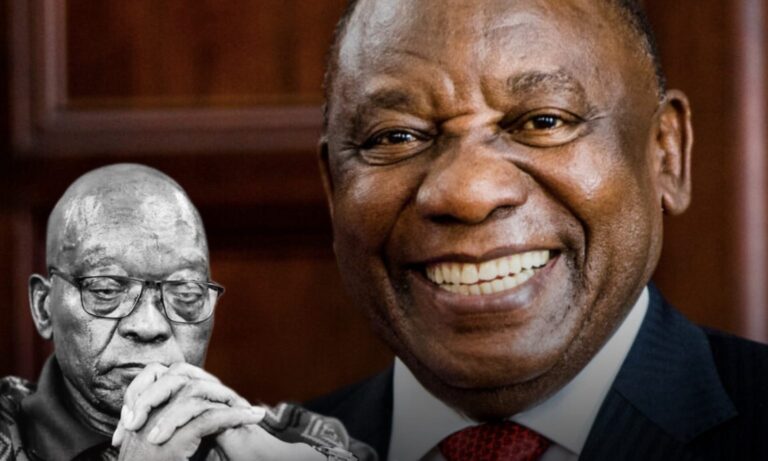
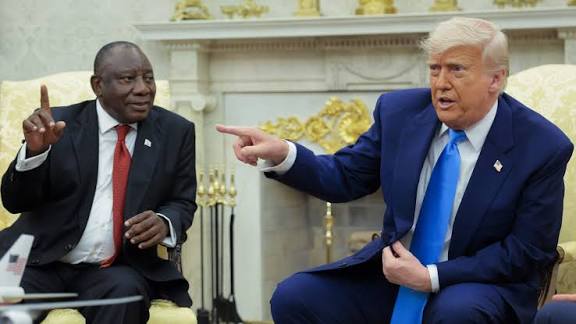
President Cyril Ramaphosa has confirmed that he was not invited to take part in United States President Donald Trump’s proposed “Board of Peace,” a new and controversial international body Trump is expected to unveil at the World Economic Forum (WEF) in Davos. Speaking amid growing speculation, Ramaphosa said he was not paying attention to rumours surrounding the initiative, stressing that no invitation had been extended to him by the US leader.
Trump is scheduled to formally launch the Board of Peace on Thursday, 22 January 2026, on the sidelines of the WEF, where he is also expected to meet several world leaders, including Ukraine’s president. The initiative is being promoted as a mechanism to help resolve international conflicts, with Trump reportedly planning a high-profile signing ceremony to mark the adoption of its charter.
Ramaphosa also explained his absence from the Davos gathering, noting that he remained in South Africa due to pressing domestic responsibilities. According to the president, government preparations for the African National Congress (ANC) Lekgotla and the upcoming State of the Nation Address (SONA) required his full attention. He added that these processes are critical to setting the government’s priorities for the year ahead and could not be sidelined.
The president reassured South Africans that the country was still well represented internationally, saying he has a capable and experienced team that can advance South Africa’s interests on global platforms when he is unable to attend in person. Ramaphosa further stated that after delivering SONA, his focus would shift more strongly towards African Union commitments and continental matters.
Trump’s Board of Peace has already drawn significant attention and criticism internationally. Reports indicate that Trump has invited a range of leaders to participate, including Russia’s Vladimir Putin, Israel’s Benjamin Netanyahu and Hungary’s Viktor Orbán. Several Middle Eastern countries, including Saudi Arabia and Qatar, are also said to have agreed to join the initiative.
A senior official in the Trump administration reportedly said that around 35 leaders had accepted invitations from an estimated 50 that were sent out. Trump has also claimed that Putin has agreed to participate, although the Kremlin has not publicly confirmed the details.
The timing of the board’s launch follows Trump’s repeated public frustration over not being awarded the Nobel Peace Prize. The US president has claimed credit for ending or de-escalating multiple international conflicts, assertions that have been widely disputed by critics and foreign policy experts.
Initially, the Board of Peace was reportedly conceived as a body to oversee the reconstruction of Gaza following the war between Israel and Hamas. However, its charter does not limit its mandate to Gaza, raising concerns among observers that Trump may be seeking to create an alternative power structure that could rival established multilateral institutions such as the United Nations.
Key US allies, including France and the United Kingdom, have expressed scepticism about the initiative, questioning both its purpose and legitimacy. Despite this, Trump has continued to promote the board aggressively, insisting that Russia and Ukraine would be “stupid” not to reach a peace deal and reiterating his claim that he could resolve the conflict rapidly.
For now, Ramaphosa has made it clear that South Africa is not involved in the Board of Peace and that his administration remains focused on domestic priorities and established international partnerships rather than speculative global initiatives.
About the Author