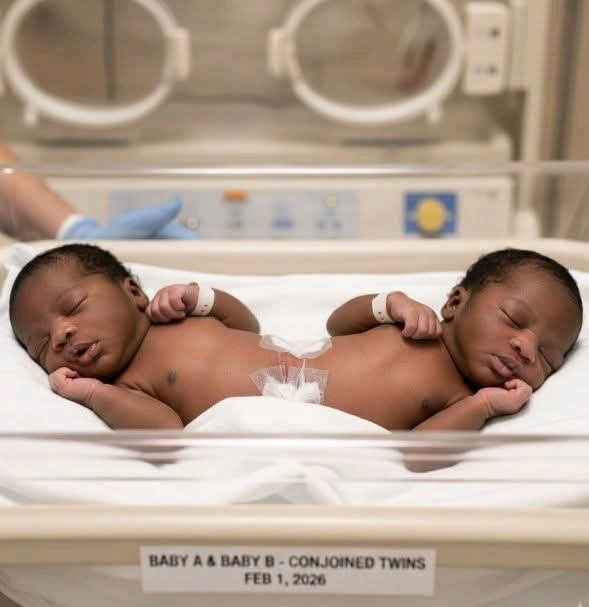
POLOKWANE – A 29-year-old mother has given birth to a set of conjoined twin boys at Mankweng Tertiary Hospital, in a rare and emotionally charged medical case that has drawn the attention of healthcare professionals across Limpopo.
The babies were delivered on 28 January 2026 after the mother was referred from Maputha Malatjie Hospital, where she had initially gone into labour. According to medical staff, the condition was only confirmed during labour, when it became clear that the twins were conjoined. Due to the complexity and risks associated with such a delivery, doctors made the urgent decision to transfer the mother to Mankweng Tertiary Hospital, which is better equipped to handle high-risk and specialised births.
The transfer was carried out swiftly, and a multidisciplinary medical team was assembled in preparation for the delivery. The twins were successfully delivered and are currently receiving round-the-clock care in the Neonatal Intensive Care Unit (NICU). Hospital officials confirmed that both babies are stable at this stage, a positive sign given the challenges often associated with conjoined twin births.
Initial medical assessments indicate that the twins are joined at the abdomen. While this type of connection can vary greatly in complexity, doctors have stressed that it is still too early to determine the full extent of shared organs or structures. A series of detailed scans and tests are now being conducted by a team of neonatologists, radiologists, and paediatric surgeons to map out the babies’ anatomy and understand exactly how their bodies are connected.
“These evaluations are critical,” a hospital source explained. “They will help us determine what organs are shared and whether surgical separation might be possible in the future. Each case of conjoined twins is unique, so careful planning is essential before any decisions are made.”
For now, the focus remains on stabilising the babies and ensuring they receive the best possible supportive care. The NICU team is monitoring their breathing, feeding, and overall development while further assessments continue.
The mother is reported to be in good condition and is also receiving care and support from the hospital’s medical staff. Healthcare workers have praised her strength and courage during what has been an unexpected and emotionally overwhelming experience. Counselling and social support services have also been made available to help her and her family cope with the situation.
Conjoined twins are extremely rare, occurring in only a small fraction of pregnancies worldwide. Their survival and long-term outlook depend largely on the way they are connected and whether vital organs are shared. In some cases, successful separation surgeries have been performed, while in others, the risks may be too great.
Hospital management has indicated that more information will be shared once doctors have completed their assessments and developed a comprehensive care plan. For now, the birth of the twins has sparked both concern and hope, as the medical team works carefully to give the babies the best possible chance at life.
About the Author