
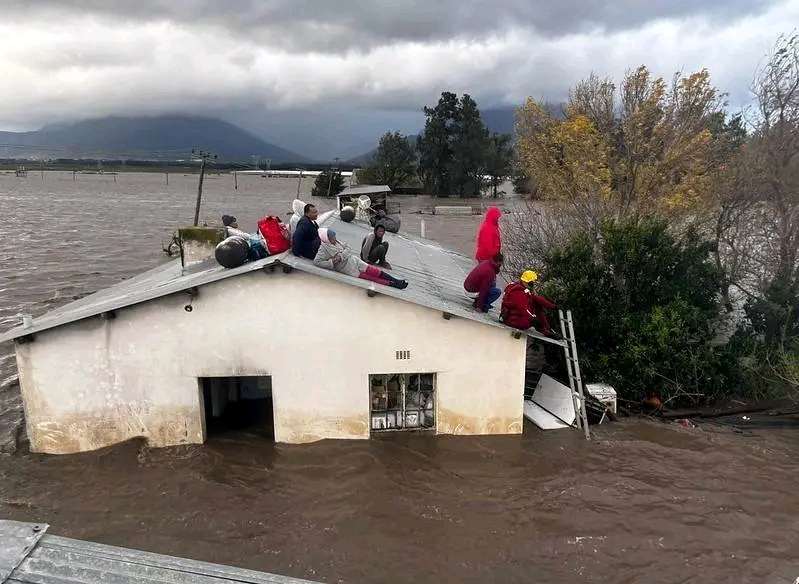
The bodies of at least three people were recovered on Tuesday after severe flooding swept through buildings on a farm along the Old N1 road between Worcester and Rawsonville in the Western Cape. The incident followed days of heavy rainfall that caused water levels to rise rapidly, leaving farm workers and their families stranded and in urgent need of rescue.
According to reports, more than 20 people were rescued from the flooded farm after they became trapped inside buildings and, in some cases, were forced to take refuge on rooftops since Monday. The rising water made movement extremely dangerous, cutting off normal escape routes and isolating those on the property.
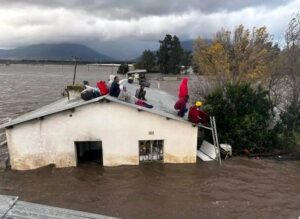
Rescue teams were eventually deployed to the scene to carry out a complex and high-risk evacuation operation. The National Sea Rescue Institute (NSRI) played a key role in the rescue effort, working alongside other emergency responders to reach those stranded in the floodwaters.
NSRI spokesperson Craig Lambinon described the difficult conditions faced by rescuers as they navigated submerged and unstable terrain. He explained that the evacuation involved a coordinated effort using ladders and rescue craft to reach people of all ages and physical conditions, including babies, toddlers, children, adults, and elderly individuals. Among those rescued were also a blind man and a paraplegic man, highlighting the wide range of vulnerable people affected by the disaster.
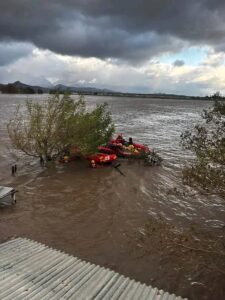
The rescue operation required repeated trips as people were brought out in stages to safety. In many cases, rescuers had to wade through deep water and swim through areas that were barely accessible due to debris and strong currents. Despite the dangerous environment, emergency teams continued their efforts until all reachable individuals were safely evacuated.
Once rescued from the floodwaters, survivors were taken to dry ground where they received immediate care and support from the farmer and local responders. Authorities have not yet released full details regarding the identities of the deceased, as investigations and recovery efforts continue.
Tragically, not all living beings on the farm could be saved during the operation. The NSRI confirmed that a number of farm animals, domestic pets, and wildlife could not be recovered as conditions worsened and the safety of rescue personnel became a priority. Officials noted that the decision was made to avoid further risk to human life as the flood situation became increasingly dangerous.
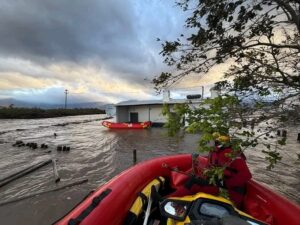
Despite the losses, rescue teams remain hopeful that some of the animals may have survived as floodwaters begin to subside in the area. Assessments of the full extent of the damage are expected to continue in the coming days as authorities work to account for all those affected and provide assistance where needed.
The flooding has left the local farming community shaken, with families mourning the loss of loved ones while also grappling with the destruction left behind by the disaster.
About the Author