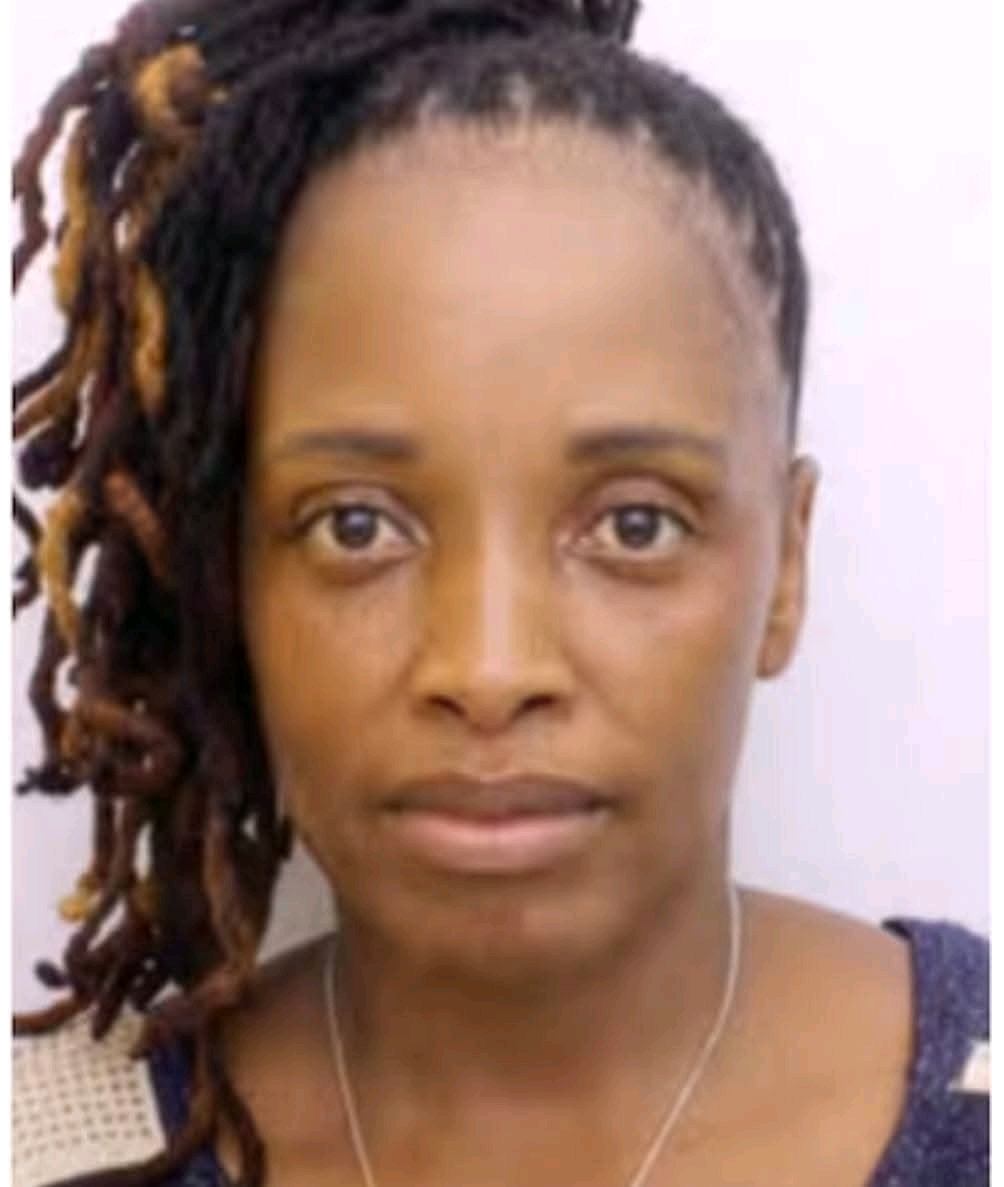
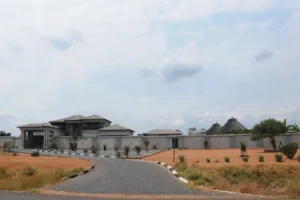
A lavish double-storey mansion rising from the quiet village of Setlaboswane in Ga-Masemola, about 40km north of Marble Hall in Limpopo, has become a striking symbol of alleged corruption within the Department of Home Affairs (DHA). Investigators believe the property was built using proceeds from a sophisticated visa fraud scheme that operated inside the department for years.
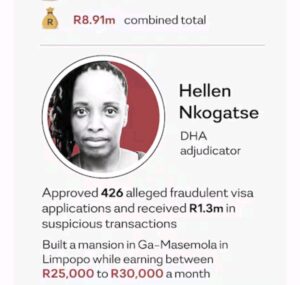
The home is registered to Hellen Nkogatse, a former senior administrator at home affairs. During her tenure, she was responsible for adjudicating visa and permit applications. Between 2021 and 2023, she approved 426 visas. Over the same period, despite earning a monthly salary of between R25,000 and R30,000, she constructed the palatial residence in her rural home village and even funded the tarring of the road leading to it.
A probe by the Special Investigating Unit (SIU) found that Nkogatse allegedly pocketed at least R1.3 million through fraudulent visa approvals before resigning in October 2023. The SIU report highlighted a significant discrepancy between her official income and her property holdings, describing it as a strong indicator of corrupt enrichment. According to investigators, 67% of the visa applications she processed were fraudulent.
When approached for comment, Nkogatse denied any knowledge of wrongdoing, saying she did not know what was being referred to. However, official records show that the luxury property is registered in her name.
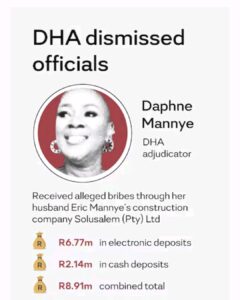
Nkogatse was not alone. The SIU uncovered what it described as a coordinated network of officials and intermediaries who allegedly exploited weaknesses in the visa system. Another DHA official, Daphne Mannye, is accused of receiving millions of rand through her husband’s construction company, Solusalem. Between 2020 and 2023, the company reportedly received R6.7 million and R2.14 million in electronic payments.
Although registered as a construction business, Solusalem allegedly functioned primarily as a conduit for corrupt funds. Investigators found that many payments were labelled as purchases for “building materials”, yet transaction patterns suggested little legitimate commercial activity. Mannye’s approval of 459 Nigerian visa applications from the Cape Town Visa Facilitation Service centre raised further red flags due to the unusually high number processed by a single adjudicator.
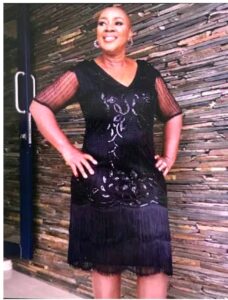
Mannye has denied the allegations, insisting she never accepted bribes and attributing her dismissal in July 2024 to a misunderstanding. She also rejected claims that she had accumulated unexplained wealth.
The SIU report details how the scheme operated. Officials would close office doors, blocking security cameras, while intermediaries sourced clients seeking visas. These middlemen allegedly created false documentation and fabricated histories for foreign nationals willing to pay for fraudulent permits. Payments ranged from R500 to R3,000 per application and were made through cash, e-wallet transfers, or discreetly concealed banknotes slipped inside application files.
One alleged beneficiary, foreign national Afeez Kolade Lawal, recorded bank transactions totalling over R84 million between January 2024 and June 2025. Small payments were reportedly channelled back into the corruption network through cash-send transactions.
Following internal audits and counter-corruption investigations, the matter was escalated to senior authorities. While a subsequent review found system weaknesses, it stopped short of declaring the entire visa system compromised. The DHA has since taken disciplinary action, dismissing 80 officials, with dozens more investigations ongoing.
The mansion in Setlaboswane now stands not just as a luxury home, but as a visible reminder of the alleged abuse of public office and the ongoing battle to restore integrity within one of South Africa’s most critical government departments.
About the Author