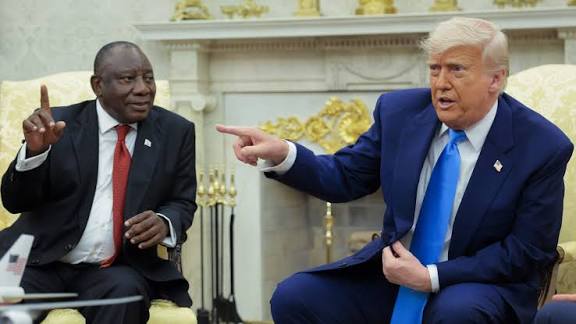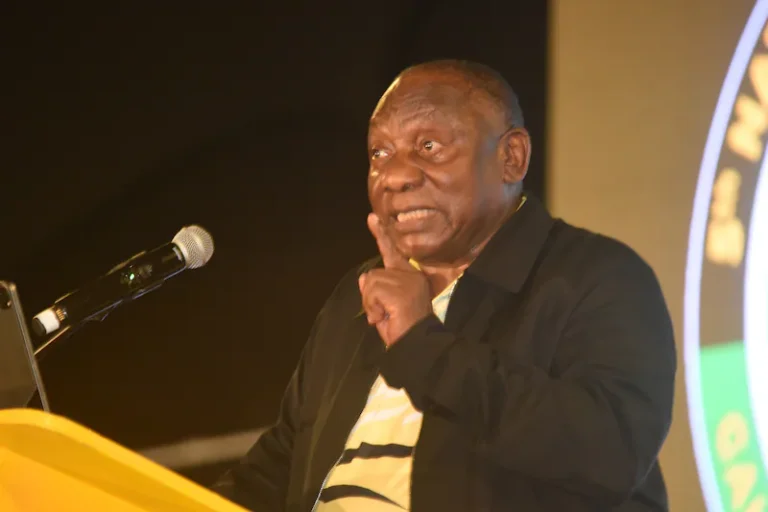
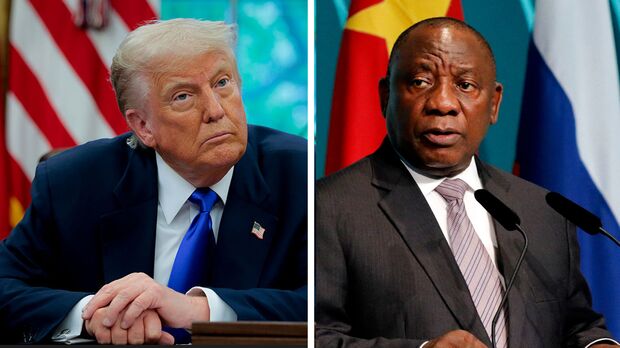
South Africans were left divided after a popular local podcaster shared a satirical post imagining a dramatic scenario in which former United States President Donald Trump ordered the arrest of President Cyril Ramaphosa and his wife, Dr Tshepo Motsepe. The post, shared on Sunday, 4 January 2026, quickly went viral, igniting intense discussion across social media platforms and exposing deep anxieties about global power, sovereignty, and political accountability.
The satire was inspired by Trump’s shocking announcement a day earlier, on Saturday, 3 January 2026, that the US military’s elite Delta Force had allegedly carried out an operation in Caracas, Venezuela, resulting in the capture of Venezuelan President Nicolás Maduro and First Lady Cilia Flores. As global reactions to the news flooded timelines, podcaster Penuel Mlotshwa added his own controversial twist by imagining a similar fate for South Africa’s head of state.
Taking to his X (formerly Twitter) account, Mlotshwa posted a mock statement styled as if it were written by Trump himself. In the fictional narrative, Ramaphosa was accused of a series of serious crimes, including money laundering linked to the Phala Phala scandal, leading a drug cartel, responsibility for the deaths of miners during the Marikana massacre, human rights violations, and even the highly contentious claim of “white genocide.” The exaggerated list of charges was intended as satire, but the reaction it provoked showed that many South Africans took the scenario seriously.
https://x.com/i/status/2007511935412040008
While some social media users immediately recognised the post as satire, others were unsettled by how believable the scenario seemed in the current global political climate. Several commenters argued that such an act would represent a dangerous abuse of power by the United States and a violation of South Africa’s sovereignty. Others, however, openly welcomed the fictional arrest, expressing frustration with Ramaphosa’s leadership and ongoing corruption allegations.
The confusion was so widespread that some users reportedly turned to artificial intelligence tools to verify whether the US had genuinely arrested the South African president. This response highlighted not only the power of satire to provoke thought, but also how misinformation and sensational headlines can blur the line between fact and fiction in the digital age.
Critics of the post warned that joking about foreign intervention trivialised serious geopolitical issues and could normalise the idea of powerful nations interfering in the affairs of weaker states. Others defended Mlotshwa, arguing that his satire forced South Africans to confront uncomfortable truths about accountability, justice, and the global imbalance of power.
Mlotshwa was not the only South African media personality to comment on the alleged capture of Maduro. Broadcaster Gareth Cliff also weighed in, using his social media platforms to mock critics of the US action and stir further debate. Together, these reactions turned an international incident into a local conversation about democracy, leadership, and South Africa’s place in the world.
Ultimately, the viral satire served as a mirror reflecting the country’s political frustrations, fears, and divisions. Whether seen as dark humour or dangerous rhetoric, the post succeeded in sparking a national conversation—one that many agreed was both revealing and deeply unsettling.
About the Author