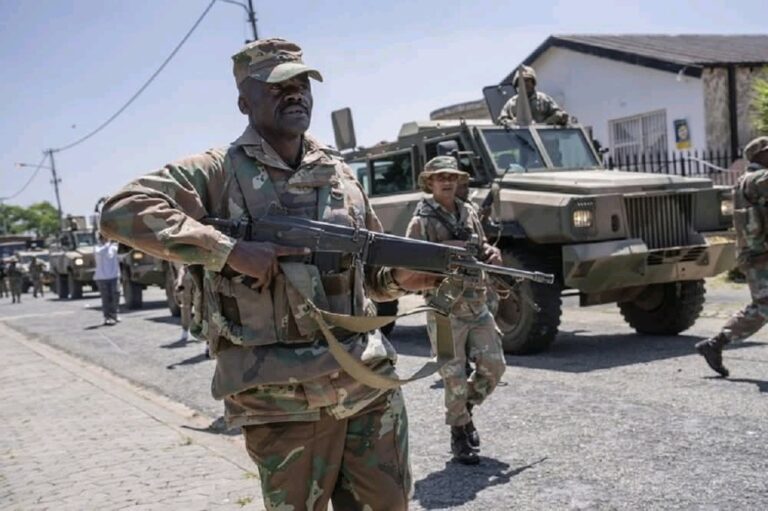
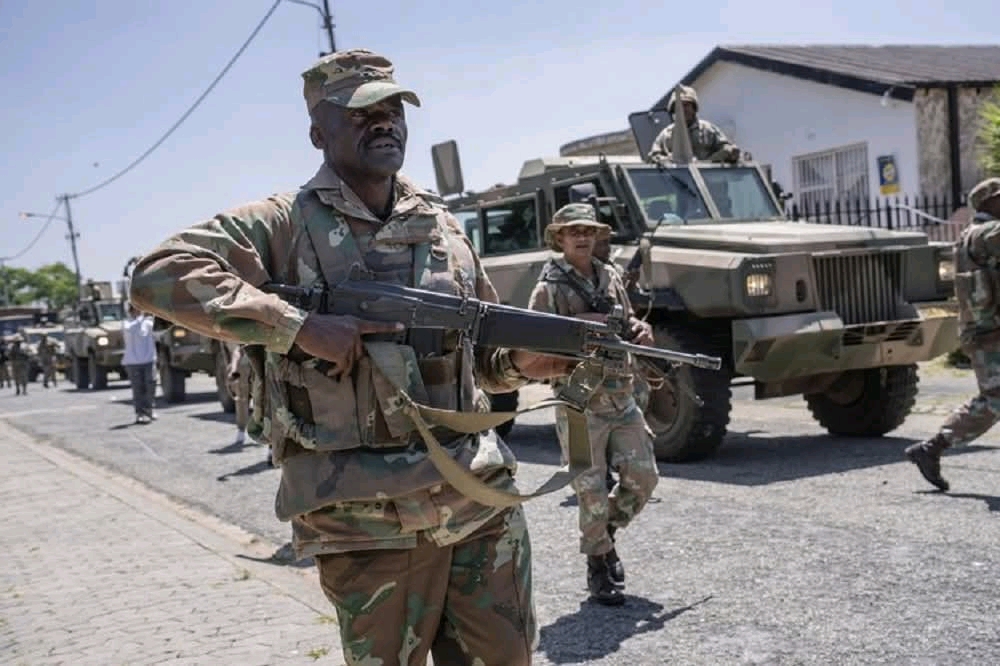
President Cyril Ramaphosa has confirmed that there are currently no plans to permanently deploy members of the South African National Defence Force (SANDF) to work with the South African Police Service (SAPS). The president made the remarks while responding to questions from Members of Parliament, clarifying the purpose of the army’s current presence in parts of Gauteng.
At the moment, more than 500 SANDF soldiers have been deployed in various areas of the province to assist police in addressing serious crimes, including gang violence and illegal mining activities. The deployment is part of a temporary effort by government to strengthen law enforcement operations in communities that have been experiencing high levels of crime.
According to Ramaphosa, the presence of soldiers is meant to support police officers and help stabilise areas affected by criminal activity. He explained that the SANDF is acting as what he described as a “force multiplier,” meaning their involvement allows police officers to focus more on investigations and other specialised duties.
The president noted that the soldiers’ main role is to assist with visible patrols and security operations. By doing so, they help maintain order while police investigators work on dismantling criminal networks operating in those communities. However, Ramaphosa stressed that this arrangement is temporary and not intended to become a long-term policing strategy.
He further explained that once the situation in the affected areas has stabilised and the police regain full operational control, the soldiers will withdraw and return to their normal duties within the defence force. This approach, he said, ensures that the military is only used when necessary to support national security efforts.
The deployment of SANDF members has recently drawn attention following increased concerns about gang-related violence and illegal mining operations in some parts of Gauteng. Communities such as Riverlea have experienced serious security challenges, prompting government authorities to take additional measures to restore stability.
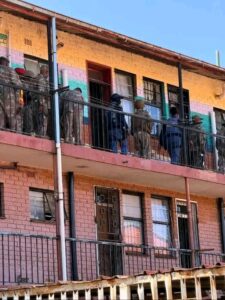
Residents in some of these areas have welcomed the presence of soldiers, saying it has helped create a stronger security presence and deter criminal activities. The joint operations between the SANDF and SAPS are aimed at restoring law and order while giving law enforcement agencies the capacity to deal with organised crime more effectively.
While the use of the military to support policing operations is not new in South Africa, it is typically implemented only under specific circumstances where police resources need reinforcement. Government officials have emphasised that such deployments are carefully considered and remain temporary measures.
Ramaphosa reassured Parliament that the government remains committed to strengthening the police service so that it can handle crime prevention and investigation independently in the long term. He added that the current deployment should not be interpreted as a permanent solution to the country’s crime challenges.
For now, the focus remains on stabilising the affected communities and ensuring that residents feel safer. Once the security situation improves and policing operations return to normal levels, the SANDF members will withdraw from the areas where they are currently deployed.
About the Author