One of South Africa’s most recognisable fast-food brands, Steers, has come under intense public scrutiny following the circulation of a viral video that appears to show employees in Steers uniforms performing gardening and outdoor maintenance work. The footage, widely shared on social media platforms, has triggered a national debate about labour practices, employee rights, and the boundaries of workplace responsibilities in the service industry.

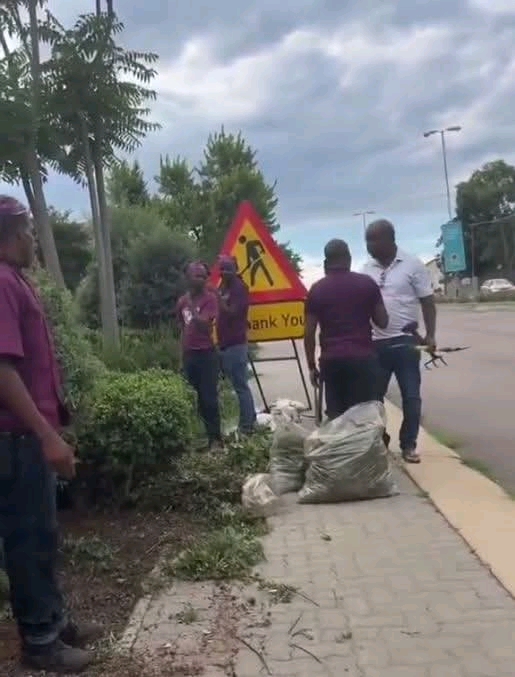
The video, whose exact location and date have not been officially confirmed, shows several men dressed in what look like official Steers uniforms cutting bushes, cleaning outdoor areas, and carrying out tasks typically associated with gardening or general maintenance. These duties are not commonly linked to the expected roles of fast-food employees, prompting widespread concern among viewers who questioned whether the workers were being treated fairly.
In the clip, a passing motorist stops to question the workers about why they are doing gardening work while wearing fast-food uniforms. One of the employees responds in a mix of local languages, saying, “Eish, Kuyitsi Modimo fela,” which loosely translates to “Only God knows.” The response, perceived by many as an expression of uncertainty or helplessness, further intensified online reactions. The driver then asks to speak to the person in charge, but the video ends before any further interaction is shown.

Following the video’s rapid spread, social media platforms were flooded with comments expressing anger, disappointment, and concern. Many users argued that employees should not be expected to perform duties outside their job descriptions, particularly for a major franchise with established operational standards. Others used the incident to highlight broader issues within the fast-food and retail sectors, including low wages, heavy workloads, and the pressure workers may feel to comply with instructions for fear of losing their jobs.
https://x.com/i/status/2013874039324873023
Some commentators suggested that the situation may not be unique to Steers, but rather reflective of wider challenges within South Africa’s labour environment. Discussions also emerged around the role of labour unions and whether workers have sufficient protection or channels to report unfair treatment without facing negative consequences.
As public pressure mounted, Steers issued an official statement responding to the allegations raised by the viral video. The company emphasised that it values the dignity and well-being of its employees and does not require staff to perform duties outside their designated roles. Steers confirmed that it had launched an urgent internal investigation to determine the circumstances surrounding the footage and to establish whether company policies were violated.
In its statement, the brand stressed that gardening and external maintenance work are not part of its employees’ responsibilities and that any deviation from this standard would not align with its values. Steers added that appropriate action would be taken should the investigation find evidence of misconduct or non-compliance with company guidelines.
The incident has once again demonstrated the power of social media in holding companies accountable and shaping public discourse. A single video, even without full context, can spark widespread debate and prompt swift corporate responses. At the same time, it underscores the importance of thorough investigations before drawing conclusions, as viral clips do not always tell the full story.
As Steers’ investigation continues, many South Africans are watching closely for clarity and accountability. For some, the incident has reinforced long-standing concerns about worker treatment in the service sector. For others, it serves as a reminder of the need for clear workplace policies, proper oversight, and respect for employee rights across all industries.
About the Author