
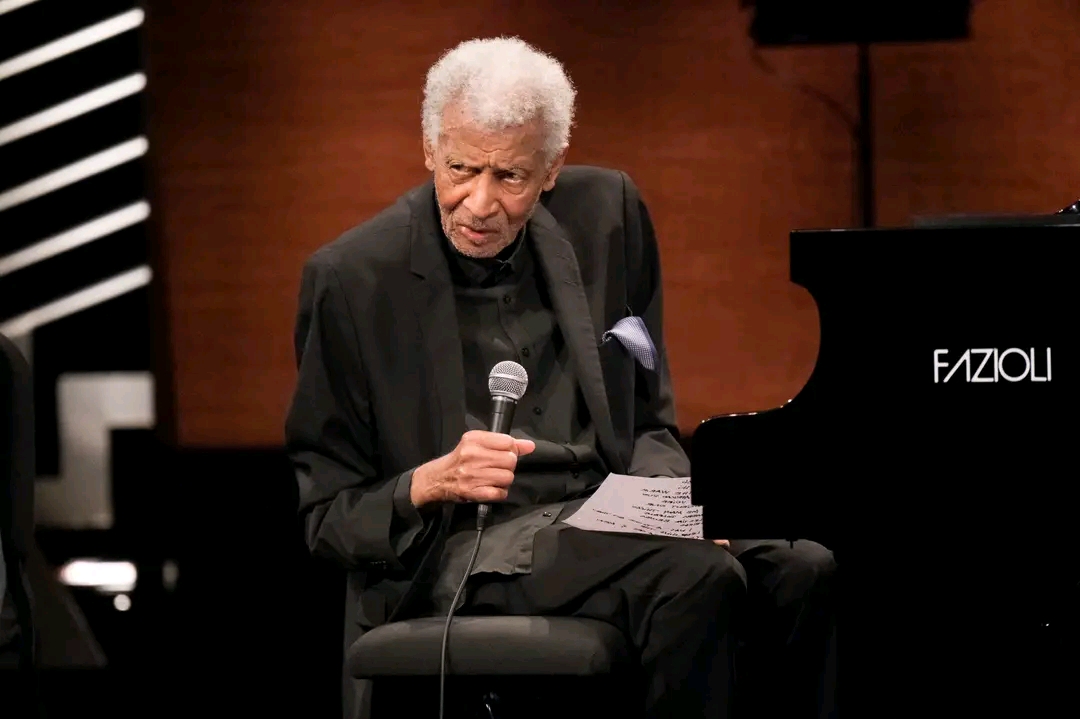
Abdullah Ibrahim, the legendary South African jazz pianist often described as his country’s musical “Mozart,” has died at the age of 91 after a short illness. He passed away peacefully in Germany, where he had been living, with his thoughts and love for South Africa still central to him, according to his partner Marina Umari.
Born in 1934 in Cape Town as Adolph Johannes Brand, Ibrahim’s life and music stretched across eight decades, leaving a lasting mark on global jazz. His early exposure to music came from his mother, a church pianist, and by the age of seven he had already begun formal piano lessons. By 15, he was performing professionally, laying the foundation for what would become an extraordinary international career.
In the late 1950s, he rose to prominence under the name Dollar Brand, forming the Jazz Epistles alongside trumpeter Hugh Masekela. The group made history in 1960 by recording *Jazz Epistle Verse One*, widely recognized as the first jazz album by an all-Black South African ensemble. Although their music was not explicitly political, their presence during apartheid-era South Africa drew scrutiny and pressure from authorities following the Sharpeville massacre.
This political climate eventually pushed Ibrahim into exile in Europe, where his career expanded significantly. A key turning point came in 1963 when his future wife, vocalist Sathima Bea Benjamin, introduced him to Duke Ellington. Ellington’s support led to the recording *Duke Ellington Presents the Dollar Brand Trio*, which helped establish Ibrahim on the global jazz scene and opened doors to international festivals.
Ibrahim’s style was distinctive, blending the harmonic language of jazz giants such as Ellington and Thelonious Monk with the rhythms and musical traditions of South Africa. Critics and fellow musicians often described his performances as meditative, deeply spiritual, and quietly powerful. Pianist Vijay Iyer once noted that Ibrahim’s music carried a “hushed mystery of spiritual communing,” highlighting his ability to make silence and softness central elements of expression.
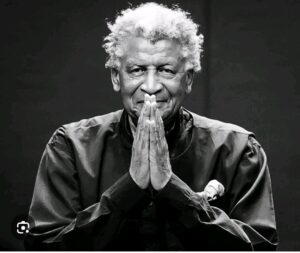
After converting to Islam in 1968, Ibrahim adopted his new name and continued refining his artistic voice. A return visit to South Africa in 1974 inspired one of his most famous works, “Mannenberg,” a composition that became a symbol of resistance and hope during apartheid. The piece was so influential it was reportedly shared secretly with Nelson Mandela during his imprisonment on Robben Island and later became known as an unofficial anthem of the anti-apartheid struggle.
Throughout the 1980s and beyond, Ibrahim remained a major figure in international jazz, performing widely with his ensemble Ekaya and as a solo pianist. His concerts were known not for technical display alone but for their emotional depth and almost spiritual atmosphere. Fellow pianist Kenny Barron once described Ibrahim’s performances as being “like a temple or church,” filled with lyrical and uplifting energy.
His influence extended to a new generation of musicians, including contemporary pianists such as Nduduzo Makhathini, who credited Ibrahim with showing him how to center identity and tradition within modern jazz expression. Ibrahim also inspired composer Vijay Iyer in his early work, particularly in his exploration of unconventional musical structures.
Beyond performance, Ibrahim composed music for films, appeared in documentaries, and continued recording well into his later years. In 2018, he received the NEA Jazz Masters Fellowship, one of the highest honors in jazz, recognizing his lifelong contribution to the art form.
Even in later interviews, Ibrahim emphasized humility and artistic continuity. He often spoke of music as a lifelong journey rather than a destination, echoing the philosophy he learned from Duke Ellington about balancing tradition with innovation.
Abdullah Ibrahim’s passing marks the end of an era in jazz, but his influence endures through his recordings, compositions, and the generations of musicians he inspired around the world.
About the Author