
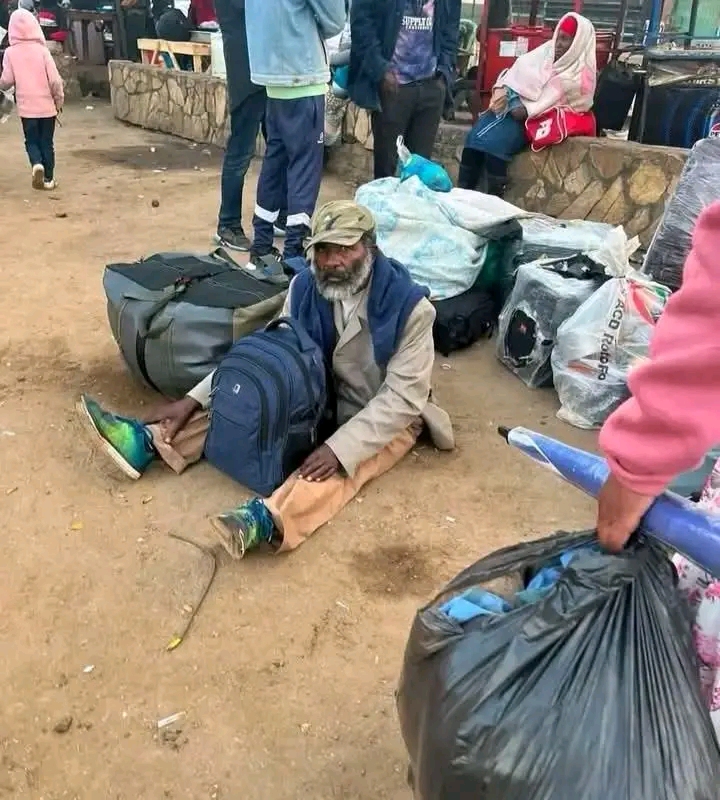
A Zimbabwean man is reportedly rebuilding his life after being deported from South Africa following approximately 25 years of living there. His unexpected return to Zimbabwe has drawn widespread attention, with many residents in Chiredzi expressing shock after recognising someone they believed they would never see again.
According to information shared on social media, the man had been out of contact with family members, friends, and people from his hometown for many years. As time passed without any communication, some reportedly assumed that he had died or permanently disappeared while living in South Africa.
Those assumptions changed when the man was allegedly seen walking through the streets of Chiredzi after returning to Zimbabwe. Residents who recognised him were reportedly astonished by his sudden reappearance, with many describing the moment as emotional and difficult to believe.

Witnesses claimed that the man appeared confused and unfamiliar with his surroundings, seemingly struggling to navigate the town he had left decades earlier. After spending such a significant portion of his life in another country, returning home may have presented unexpected challenges as he attempted to reconnect with a place that had changed considerably over the years.
The story has quickly gained traction online, sparking discussions about the realities faced by people who are deported after living abroad for long periods. Many social media users pointed out that returning home after decades away can be emotionally overwhelming, especially when individuals have built their lives, careers, friendships, and families in another country.
Although reports suggest the man was deported from South Africa, the exact circumstances surrounding his removal have not been independently confirmed. Authorities in either South Africa or Zimbabwe have not publicly commented on the case, and many details remain unclear.
Despite the limited verified information, the incident has reignited broader conversations about migration and the challenges experienced by long-term migrants. Some people highlighted the emotional impact of leaving behind a life established over many years, while others discussed the difficulties of reintegrating into communities that may have changed dramatically during their absence.
The case has also raised questions about the kind of support available to deportees returning to their countries of origin. Access to temporary accommodation, counselling, employment assistance, identity documentation, and family reunification services are among the forms of support many believe could help people adjust after spending decades living abroad.
As the story continues to circulate, it serves as a reminder that migration often has lasting personal consequences that extend beyond borders and legal processes. For those returning home after many years away, rebuilding a sense of belonging can be just as challenging as starting over.
About the Author