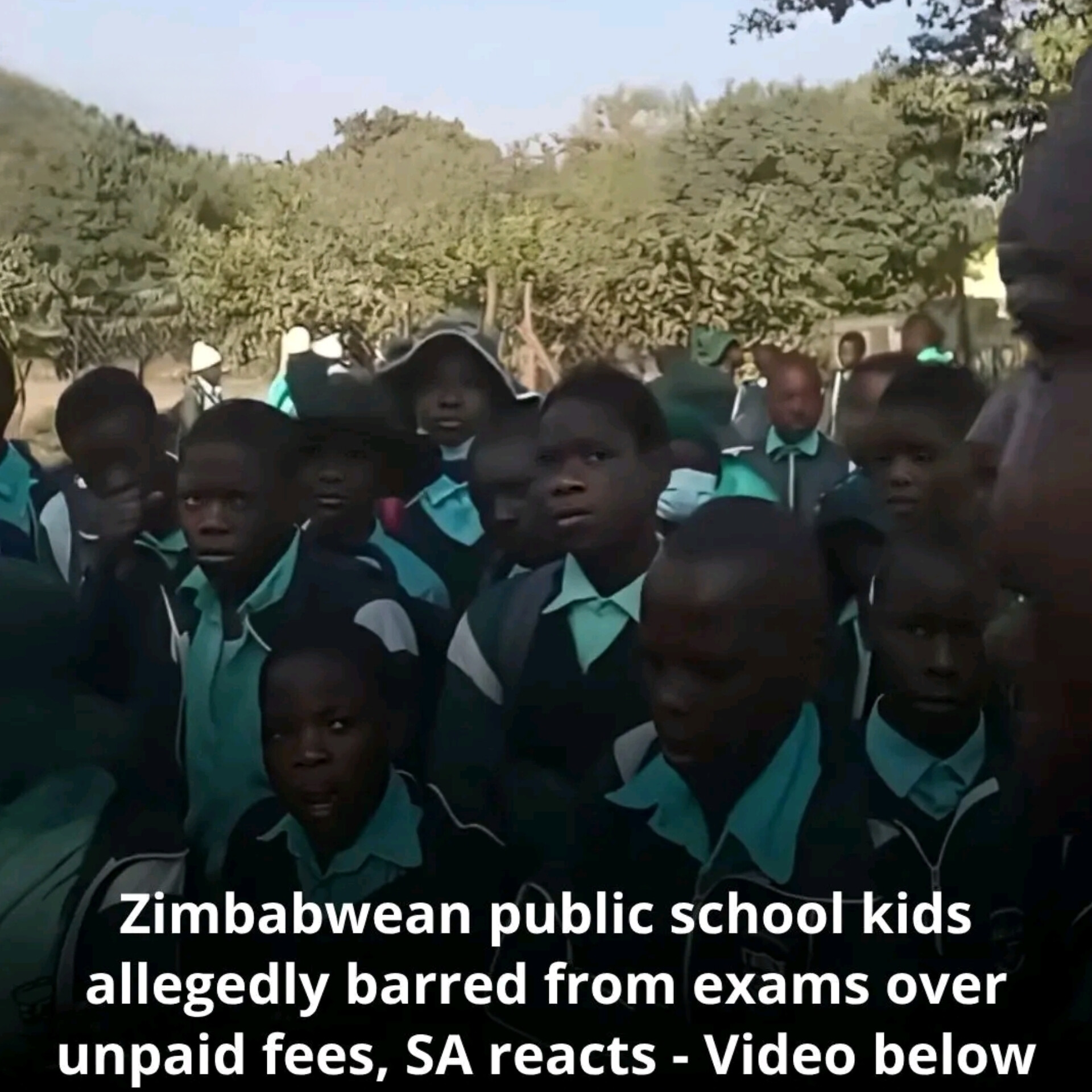
A video showing schoolchildren being turned away from a Zimbabwean school over unpaid fees has ignited widespread debate on social media, with many expressing concern about the challenges families face in accessing education during the country’s ongoing economic struggles.
The footage, which has been widely shared on TikTok, reportedly captures an incident that took place on 12 July 2026. It shows a group of pupils standing outside their school after allegedly being denied entry because their parents had not paid outstanding school fees.
According to information shared alongside the video, the learners were expected to begin practical examinations but were prevented from participating until their fees had been settled. A man speaking in the clip claimed that the school was using the practical exams as leverage to encourage parents to pay overdue balances.
The video quickly attracted thousands of views and comments, with many viewers debating whether schools should refuse children access to education because of unpaid fees.
For many Zimbabwean families, paying school fees has become increasingly difficult as the country continues to battle economic hardship, high unemployment and rising living costs. Parents often struggle to afford basic necessities such as food and transport, making education expenses an additional financial burden.
The incident prompted strong reactions from social media users in both Zimbabwe and South Africa. Some questioned why organisations that advocate for children’s rights had not publicly addressed such incidents, while others argued that children should never be punished for circumstances beyond their control.
Several commenters also turned the discussion toward Zimbabwean politics, with some suggesting that despite the country’s economic difficulties, many citizens would continue supporting the current government. These political remarks generated heated debates online, with opinions divided among users.
Others, however, defended the school’s decision, arguing that educational institutions rely heavily on school fees to cover operating costs, including teacher salaries, learning materials, maintenance and utilities. Without adequate funding, they said, schools may struggle to provide quality education.
The discussion also extended beyond education and touched on broader issues affecting the region. Some South African users linked the story to ongoing conversations about Zimbabwe’s economic situation and the migration of Zimbabweans to neighbouring countries in search of employment and better opportunities.
The clip emerged at a time when immigration and cross-border movement remain sensitive topics in South Africa, where debates around undocumented migrants and economic pressures continue to dominate public discourse.
Despite the video’s popularity, several details surrounding the incident remain unverified. Independent confirmation of exactly where the school is located and the circumstances leading up to the learners being turned away has not been publicly established.
Nevertheless, the footage has once again highlighted the difficult choices many Zimbabwean families face when trying to provide an education for their children amid prolonged economic uncertainty.
As the debate continues online, many people have called for solutions that protect children’s right to education while also recognising the financial challenges schools face in sustaining their operations. The incident serves as another reminder of the complex social and economic issues affecting education across Zimbabwe.
About the Author