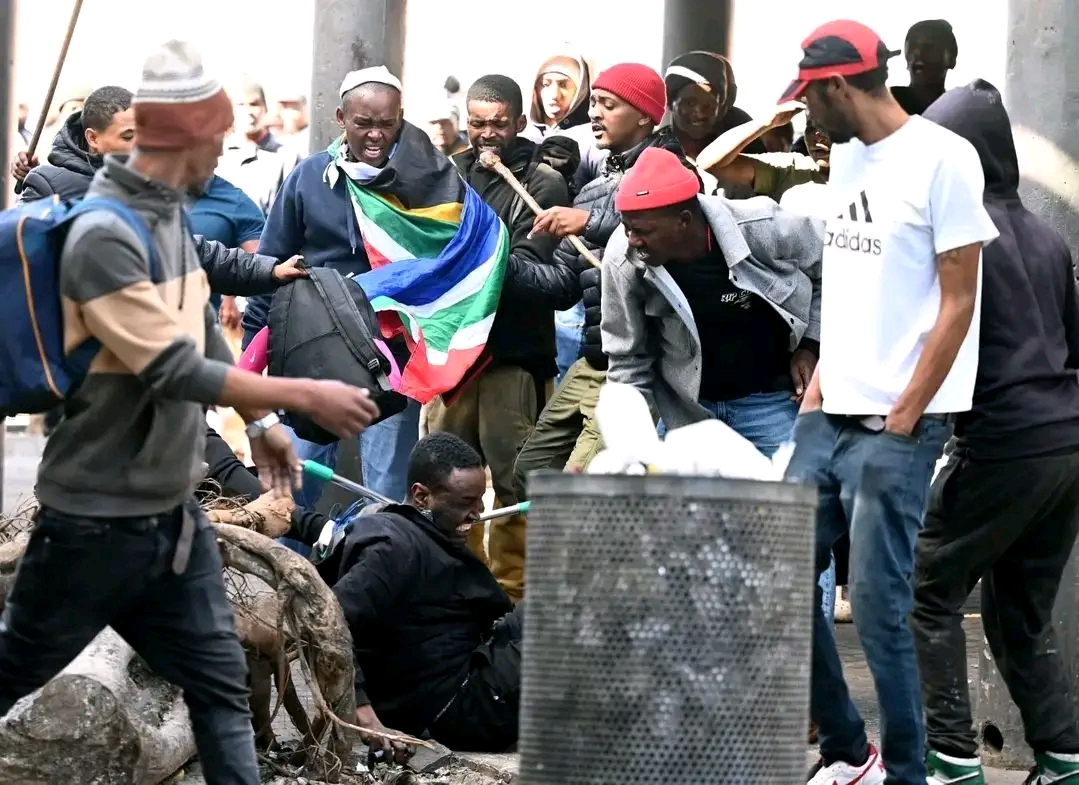
Tensions have risen sharply in Bellville, Cape Town, as demonstrations linked to the March and March movement and Operation Dudula have intensified over concerns surrounding undocumented immigration, informal trading and the enforcement of South Africa’s immigration laws.
The protests have attracted local residents and informal traders who say they are frustrated by what they believe is inadequate enforcement of municipal bylaws and immigration regulations. Some protesters argue that undocumented foreign nationals are operating businesses without the necessary permits, creating unfair competition for South African traders.

Bellville, known as a busy commercial and transport hub, has become an important area of focus for the movement. What initially began as community gatherings and organised marches has reportedly developed into increasingly tense confrontations in parts of the area.
Demonstrators have marched through major routes, including areas around Voortrekker Road and the Bellville transport precinct, calling for undocumented migrants to leave the country. Protesters have also demanded stronger action from government departments responsible for immigration and municipal law enforcement.
However, the demonstrations have not always remained peaceful. Reports contained in the original article describe confrontations between groups, damage to property and disruptions to businesses. Some informal trading stalls operated by foreign nationals were reportedly dismantled during the unrest.
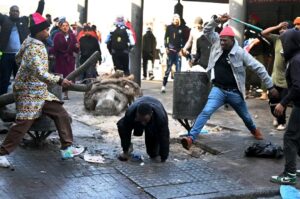
The escalation has also created challenges for law enforcement officers tasked with preventing violence while allowing people to exercise their constitutional right to protest. Public Order Police have reportedly been deployed in response to unrest, with crowd-control measures used when situations became difficult to manage.
Beyond the immediate conflict, the protests have highlighted a much wider debate about immigration, unemployment and competition within South Africa’s informal economy.
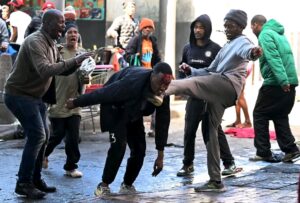
While protesters insist that their campaign is aimed at undocumented immigration and illegal trading, migrant rights organisations have raised concerns about the potential impact on people who are legally in the country. Some foreign nationals hold valid permits, refugee documentation or other forms of legal status and have lived and worked in South Africa for many years.
For these residents, the protests have created uncertainty and fear, particularly for those whose businesses depend on busy transport and shopping areas.
Authorities are therefore facing pressure from different sides. Protesters want tougher immigration enforcement, inspections and action against people they believe are operating illegally. At the same time, government and law enforcement agencies must ensure that legal residents are protected and that protests do not descend into vigilantism, xenophobic attacks or destruction of property.
The situation in Bellville reflects broader frustrations that have been building around immigration and economic opportunities in South Africa. However, resolving these issues will require more than street demonstrations.
Effective enforcement of immigration laws, transparent regulation of informal businesses and meaningful engagement with affected communities could help reduce tensions.
As Bellville remains under close watch, the events serve as another warning of how quickly frustration over immigration and economic hardship can escalate when communities lose confidence in official systems.
For lasting peace, authorities will need to balance immigration enforcement with the protection of individual rights, while ensuring that everyone operating a business does so according to the law.
About the Author