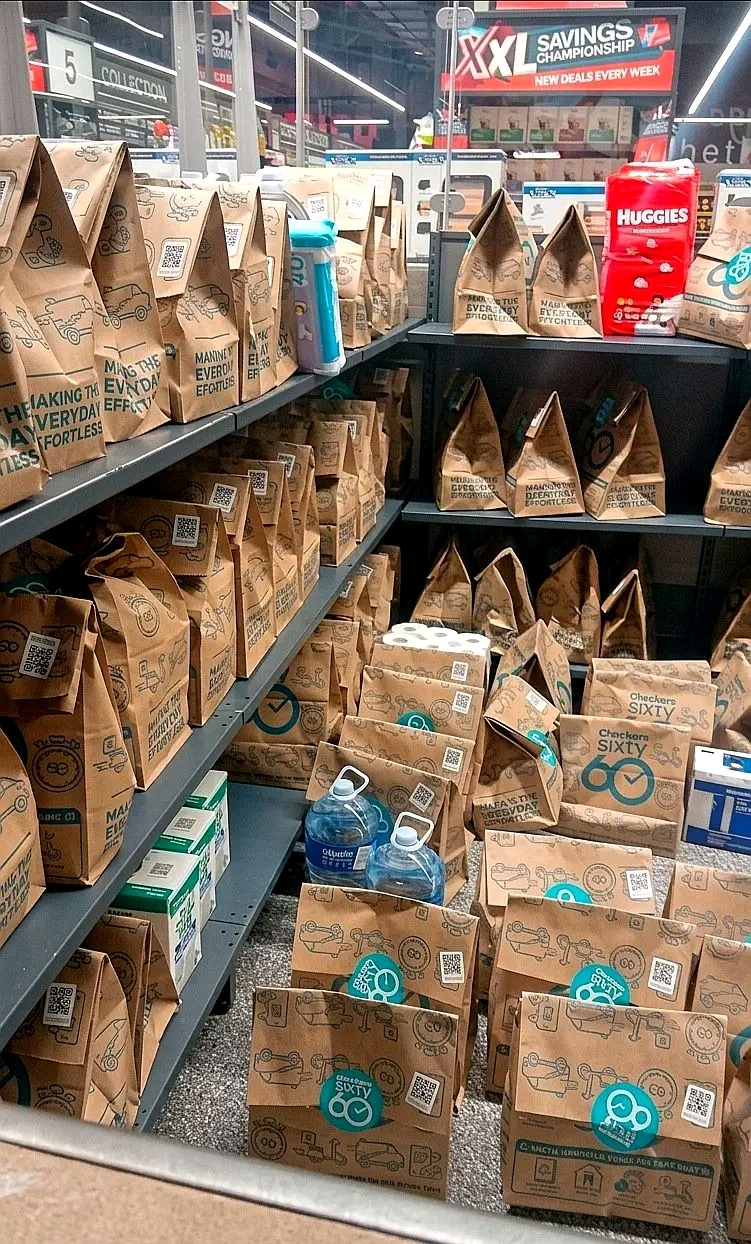
Checkers Sixty60 customers experienced major delivery delays this week after operations at some fulfilment centres were disrupted, leaving hundreds of grocery orders waiting to be processed. Videos shared on social media showed packed shopping trolleys, shelves filled with uncollected grocery bags, and overwhelmed staff struggling to keep up with demand.
The footage, posted on X on 1 July by social media user @LCabonena, quickly gained attention online as South Africans discussed the reasons behind the delays and what they could mean for employment in the country.
According to reports circulating online, the disruption followed a sudden reduction in the number of delivery drivers available to fulfil customer orders. The reported shortage came shortly after the nationwide demonstrations held on 30 June, where concerns about employment and immigration were among the issues raised.

The videos showed rows of shopping trolleys filled with groceries waiting to be dispatched, while storage areas inside the store appeared overcrowded with completed orders that had not yet been collected for delivery. The backlog suggested that the retailer’s popular same-day delivery service had been placed under significant pressure.
The incident has since sparked widespread debate across social media. While some users criticised the retailer for not putting contingency plans in place ahead of the planned protests, others viewed the situation as an opportunity for unemployed South Africans to fill the available delivery positions.
One social media user simply wrote, “Employment created,” suggesting that the vacancies could open doors for local job seekers. Others questioned whether the company had relied too heavily on foreign nationals within its delivery network.
https://x.com/i/status/2072290758275522760
Some customers expressed frustration over the impact the delays could have on their grocery orders. One subscriber said they had cancelled their monthly delivery subscription, fearing that the service disruption would continue for some time. Others also raised concerns about frozen and perishable food items that could potentially go to waste if deliveries were not completed quickly.
However, several commenters argued that the retailer should have anticipated the disruptions and recruited additional drivers before the demonstrations took place. They believed better planning could have prevented the operational backlog and reduced inconvenience for customers.
Meanwhile, others pointed to reports of job seekers waiting at various retail outlets in hopes of securing delivery work, saying there appeared to be willing applicants ready to step into the available roles.
The discussion has highlighted the growing importance of online grocery delivery services in South Africa, where platforms such as Checkers Sixty60 have become a preferred shopping option for many households due to their speed and convenience.
Although the retailer has not publicly detailed the full extent of the disruption, the viral videos have reignited conversations about employment opportunities, workforce planning, and the resilience of essential delivery services during periods of uncertainty.
As customers await a return to normal service, the incident continues to fuel debate about balancing efficient service delivery with creating employment opportunities for South Africans. For many, the delays have become more than just a temporary inconvenience—they have become part of a broader national conversation about jobs, planning, and the future of the country’s retail workforce.
About the Author