A viral video showing Nigerian football supporters cheering for Mexico during its World Cup clash against South Africa has ignited widespread discussion across social media, highlighting growing tensions linked to South Africa’s ongoing anti-migrant sentiments.
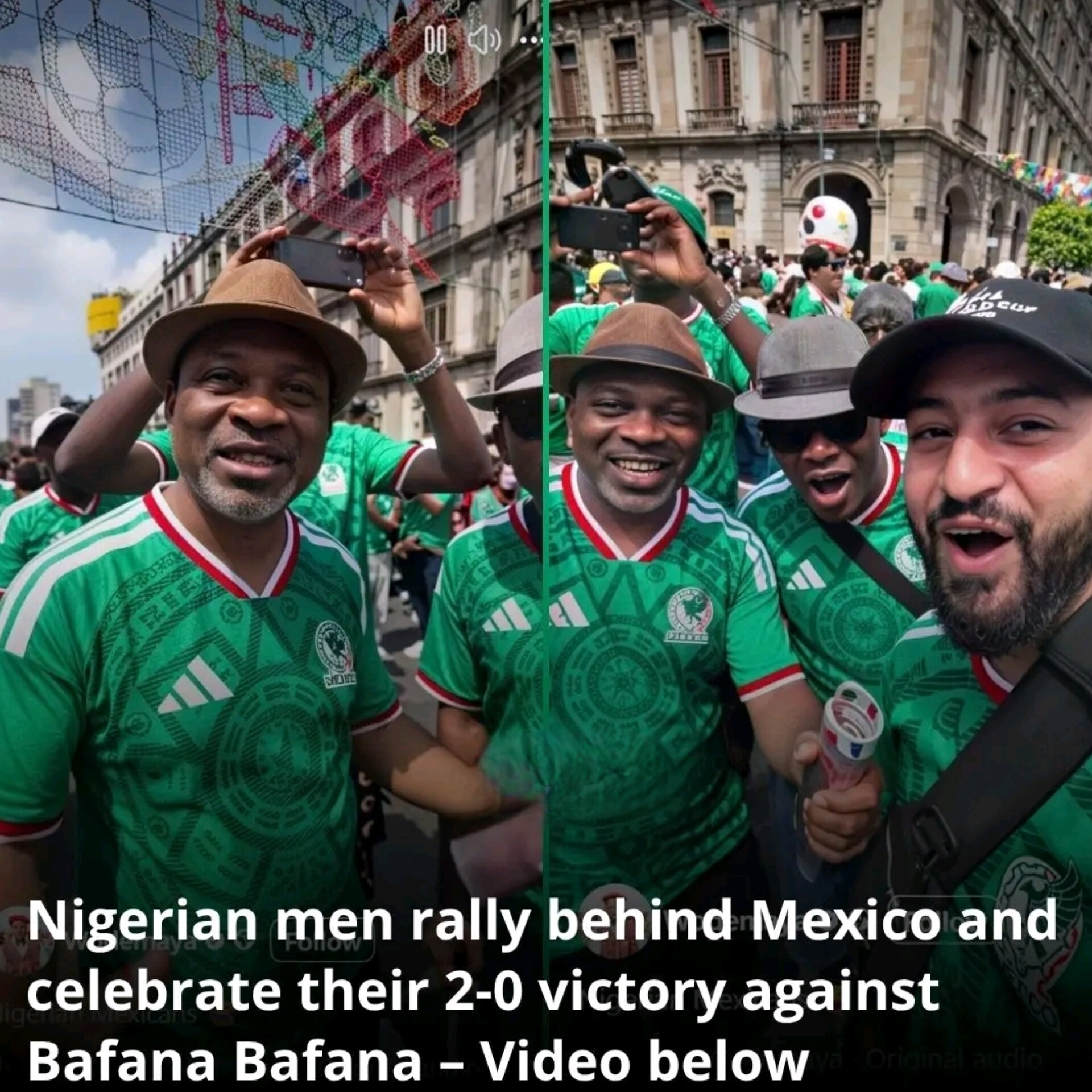
The video, shared by popular African travel content creator Wodemaya, features a group of Nigerian expatriates living in England proudly wearing Mexican football jerseys ahead of the highly anticipated match between Mexico and Bafana Bafana. Rather than backing a fellow African nation, the supporters openly declared their support for Mexico, a move that surprised many football fans across the continent.
Traditionally, African supporters have rallied behind fellow African nations during major international tournaments, especially at the FIFA World Cup. However, many social media users argued that recent developments in South Africa have strained that sense of continental unity.
The growing backlash comes amid increasing concerns over anti-migrant demonstrations and calls for undocumented foreign nationals to leave South Africa. A planned nationwide march scheduled for 30 June 2026 has attracted international attention, with critics claiming that foreign nationals living in the country have become increasingly fearful amid rising tensions.
As a result, some football supporters from other African countries have chosen not to support South Africa on the global stage. The Nigerian fans featured in the viral video said they would be backing Mexico instead, a decision that quickly attracted thousands of reactions online.
https://x.com/i/status/2065140985315631280
Their celebrations intensified after Mexico secured a convincing 2-0 victory over South Africa. Bafana Bafana’s difficult outing was made worse by disciplinary issues, with two South African players receiving red cards during the match.
The result sparked a flood of comments from football fans across Africa, many of whom viewed the defeat as symbolic of broader frustrations surrounding South Africa’s treatment of foreign nationals.
One social media user joked that the entire continent had united in a single prayer for South Africa to lose and that the prayer had been answered. Another commenter claimed that if South Africa were playing alone in an empty stadium, many African supporters would still choose to support the venue rather than the team.
Several users expressed happiness at Mexico’s victory, while others said they would continue supporting other nations against South Africa throughout the tournament. Some Nigerians clarified that they generally support African teams at international events but felt unable to do so in this case because of the current political climate.
Not everyone agreed with the reactions. Many South African football fans expressed disappointment and shock at the level of hostility directed at Bafana Bafana. They argued that sport should remain separate from politics and that the national team should not be held responsible for broader social and political issues.
The incident has once again demonstrated how sport can reflect larger societal debates. What began as a football match quickly evolved into a conversation about migration, unity, and Africa’s complex relationships across borders.
While Mexico celebrated an important World Cup victory, the online reaction showed that the match carried significance far beyond the final scoreline, exposing deep divisions and prompting conversations about solidarity among African nations.
About the Author