
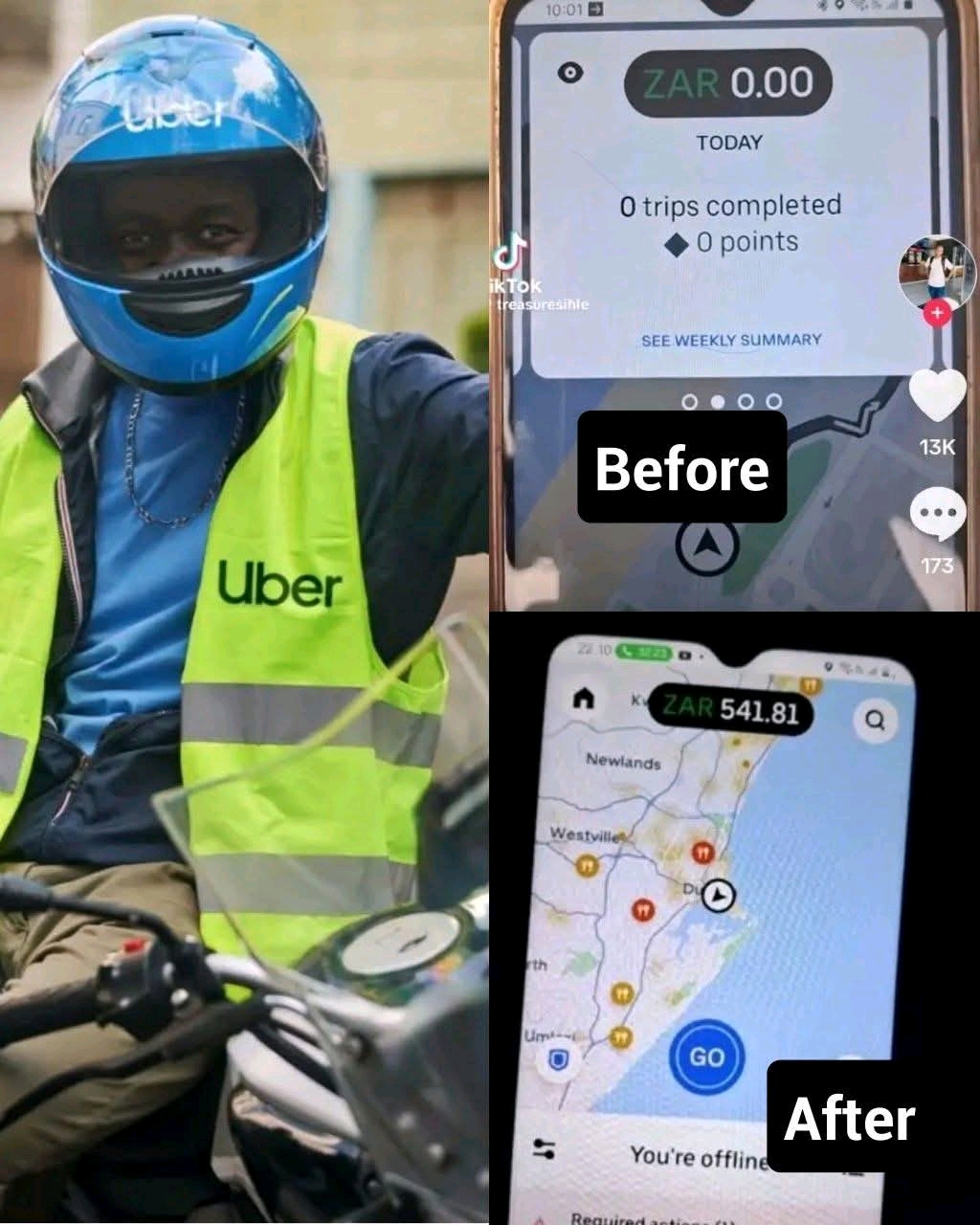
A delivery driver working for Uber Eats in Durban has sparked widespread conversation after revealing how much he earns in a single day. The driver, who posts on TikTok under the handle @treasuresihle, documented his entire Monday shift and showed viewers that he made more than R500 before calling it a night.
The video, uploaded on 17 February 2026, begins at 10am and follows him throughout the day as he accepts orders, weaves through traffic on his motorbike, and delivers meals across different parts of the city. By the end of his shift, his total earnings had exceeded R500 — an amount many viewers considered impressive for a regular weekday.
Throughout the clip, the driver offers practical advice for others interested in joining the food delivery industry. He explains that one of his key strategies is to remain in busy neighbourhoods where order demand is consistently high. He also focuses on peak hours, particularly lunchtime and dinner rushes, when requests tend to surge. By carefully selecting shorter and faster routes, he is able to complete more deliveries in less time, increasing his daily income.
His video provides an unfiltered look into South Africa’s rapidly growing gig economy. With unemployment remaining a challenge for many, app-based delivery services have become an attractive option for students, part-time workers, and individuals seeking extra income. The flexibility of choosing when and how long to work is a major draw, allowing drivers to structure their schedules around other commitments.
Social media users responded positively to the driver’s transparency. Many praised him for showing the reality of the job instead of glamorising it. Supportive comments flooded the post, with followers encouraging him to keep working hard and sharing motivational messages. Others used the opportunity to ask practical questions about starting out, particularly the cost of buying a suitable motorbike. Some users estimated that between R10,000 and R11,000 would be needed to secure reliable transport for deliveries.
However, not all feedback was purely celebratory. Some commenters raised concerns about the risks involved in delivery work. Issues such as robbery, inconsistent app payouts, missing customer tips, and unfair allocation of trips were highlighted as ongoing challenges faced by drivers. Safety remains a key worry, especially for those navigating urban areas late at night.
The viral clip has ignited a broader conversation about the realities of on-demand work in South Africa. While gig platforms offer independence and an opportunity to earn money quickly, they also demand long hours, constant movement, and heightened awareness of potential dangers.
Ultimately, the Durban driver’s honest documentation has struck a balance between inspiration and realism. His experience shows that earning a decent daily income is possible, but it requires strategy, consistency, and resilience in an industry that can be both rewarding and demanding.
About the Author