
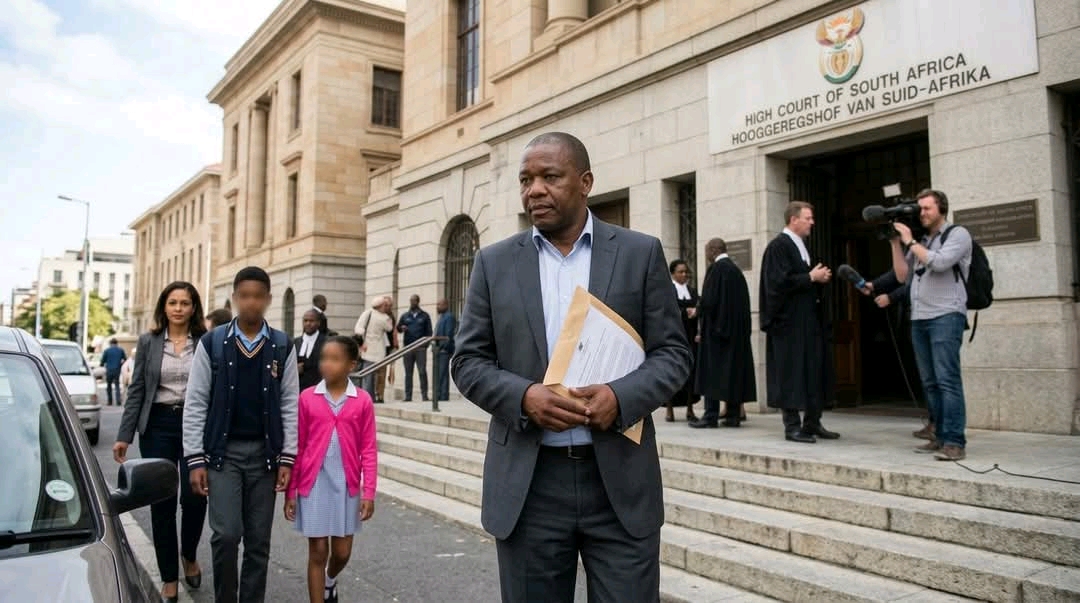
A recent ruling by the Western Cape High Court has sparked widespread debate about maintenance laws in South Africa, particularly in relation to blended families. The case highlights the complex legal and social questions that arise when stepparents take on parental roles without formal adoption.
The matter involves a couple who were married for eight years under an out-of-community-of-property regime with accrual. Both partners entered the marriage with children from previous relationships, creating a blended household. Although the husband never legally adopted his wife’s children, their biological father remained involved in their lives and contributed monthly maintenance of just over R7,000.

During the marriage, the stepfather assumed a significant role in the children’s upbringing. He financially supported a high standard of living that included private education, international holidays, luxury vehicles, and residence in an upmarket home worth millions of rand. Over time, the children became accustomed to this lifestyle, largely funded by him.
When the relationship broke down, the man argued that he had no legal obligation to continue supporting the children. He maintained that he was neither their biological nor adoptive father, and that any financial contributions he had made were voluntary and should not translate into a binding responsibility after separation.
However, the court took a different view. Acting under Rule 43, which allows for interim relief during divorce proceedings, the judge ordered the man to continue providing financial support until the divorce is finalised. The order requires him to pay R40,000 per month in maintenance, contribute up to R35,000 towards rent, keep the children on his medical aid, and cover additional household and living expenses. He was also instructed to contribute R1 million towards legal costs.
Legal experts have pointed out that this ruling does not necessarily set a permanent precedent requiring stepparents to maintain stepchildren. Instead, it is a temporary measure designed to ensure stability during the divorce process. The court’s primary concern was to prevent a sudden disruption to the children’s standard of living while legal matters are still ongoing.
A key factor in the court’s decision was the principle of acting in the best interests of the children. Evidence showed that the stepfather had effectively taken on a parental role, both emotionally and financially. At one point, he even referred to the children as “our kids,” reinforcing the perception that he had accepted responsibility for their well-being.
The case sheds light on the evolving nature of family structures in South Africa. As blended families become more common, courts are increasingly required to interpret traditional laws in ways that reflect modern realities.
While the final outcome of the divorce may ultimately redefine financial responsibilities, the ruling sends a clear message: individuals who assume parental roles and create financial dependency during a marriage may face legal obligations, even without formal adoption.
About the Author