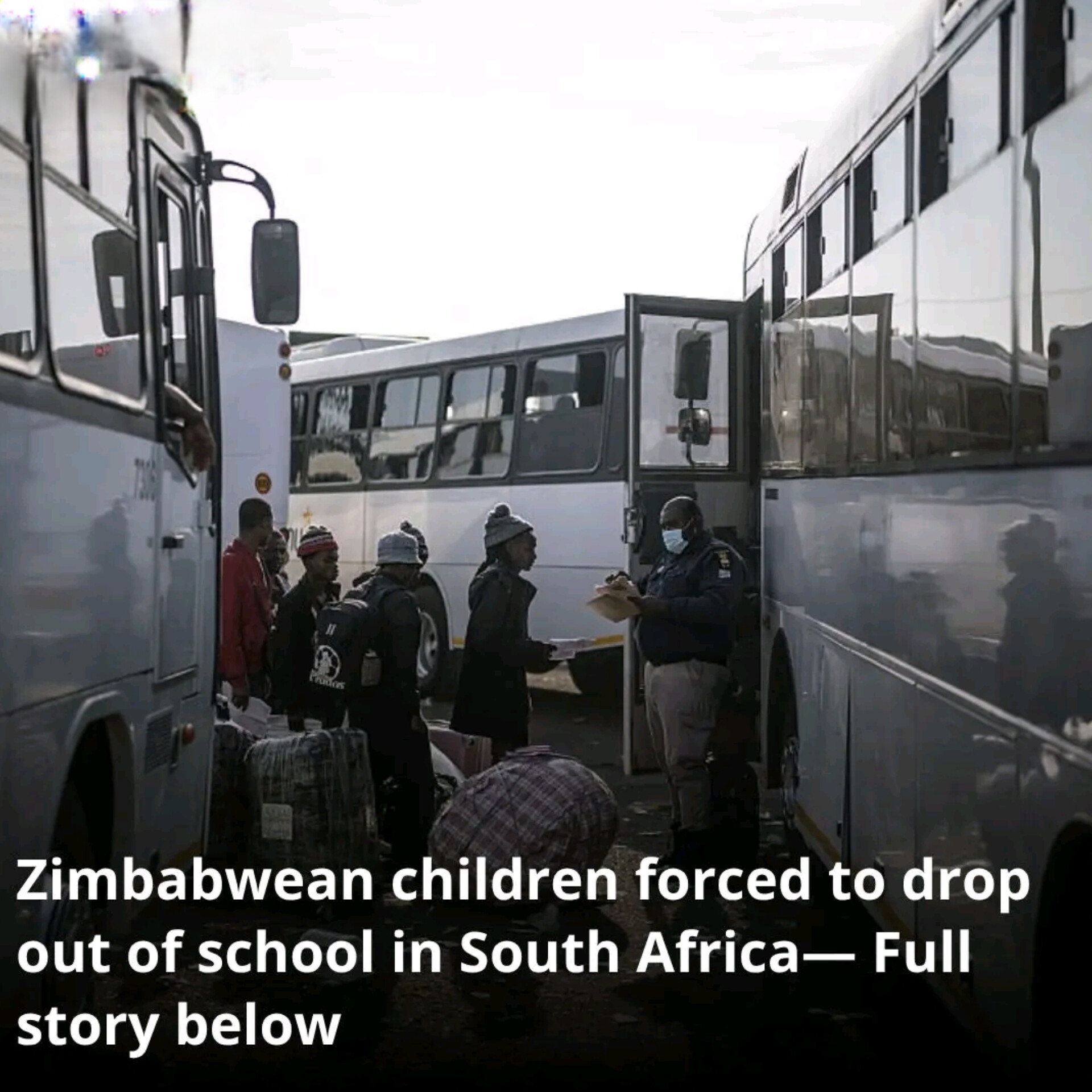
Thousands of Zimbabwean learners living in South Africa face an uncertain academic future as growing anti-illegal immigration protests continue to disrupt their education. In response, the Zimbabwe Exemption Permit (ZEP) Coordinating Committee has appealed to the governments of South Africa and Zimbabwe to work together to ensure that affected learners can complete their studies without losing the academic year.
Edward Muchatuta, the national coordinator of the committee, has urged both governments to introduce emergency measures to protect children whose schooling has been interrupted. His appeal comes after many Zimbabwean families reportedly withdrew their children from South African public schools due to safety concerns and uncertainty surrounding anti-immigration demonstrations that intensified before the 30 June 2026 deadline announced by some local groups targeting undocumented foreign nationals.
One of the biggest concerns involves Grade 12 learners who are already registered to write the 2026 National Senior Certificate (NSC) examinations in South Africa. Muchatuta explained that transferring these learners to Zimbabwe’s education system halfway through the school year would be extremely difficult because the two countries follow different curricula.
According to the committee, differences in subjects such as mathematics, science and language requirements mean that learners could struggle to adapt, placing their chances of completing their final year of school at serious risk.
To address the problem, the committee has proposed the establishment of joint examination centres in border towns such as Beitbridge in Zimbabwe or Musina in South Africa. These centres would allow matric learners to safely write their final examinations without having to remain in communities where tensions have increased.
The committee also highlighted the challenges facing Grade 7 learners. Registration for Zimbabwe’s equivalent exit examinations closed earlier this year, leaving many pupils unable to register in either country’s examination system. This has created uncertainty for hundreds of children whose education has been disrupted by recent events.
Muchatuta said parents are willing to contribute financially towards special academic support programmes that could help affected learners continue their studies. He added that qualified Zimbabwean teachers returning home could assist with these programmes if both governments provide the necessary support and coordination.
He stressed that political commitment from both Pretoria and Harare is essential for the proposed intervention to succeed, saying the priority should be protecting the education and future of the affected children.
Earlier this year, South Africa’s Department of Basic Education rejected claims that foreign learners place excessive pressure on the country’s public school system. Basic Education Minister Siviwe Gwarube revealed that more than 253,000 foreign learners are enrolled in South African public schools, alongside over 3,000 foreign educators.
The department stated that foreign learners account for only 1.8% of the country’s total public school population, dismissing suggestions that they are responsible for overcrowding in schools.
Meanwhile, organisations assisting displaced migrants continue to provide humanitarian support as families affected by the unrest prepare to return to Zimbabwe or seek alternative arrangements. Education advocates hope that both governments will act swiftly to prevent thousands of children from becoming the biggest victims of the ongoing immigration tensions.
About the Author