
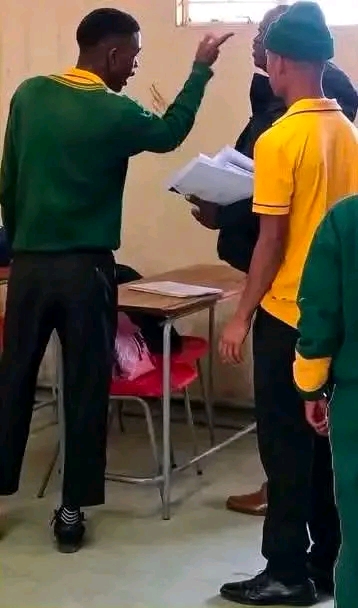
A disturbing video showing a learner allegedly confronting and verbally attacking a teacher inside a classroom has sparked widespread debate about discipline, educator safety and the state of South Africa’s public schools.
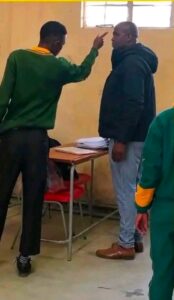
The short clip, which has circulated widely on social media platforms including TikTok, X and Facebook, appears to show a tense confrontation between a learner and an educator. In the footage, the learner can be seen standing close to the teacher and pointing a finger at the educator while allegedly directing a series of insults at them.
The teacher appears visibly uncomfortable and attempts to remain composed while trying to regain control of the classroom. Other learners can reportedly be heard laughing and talking in the background, adding to the chaotic atmosphere.
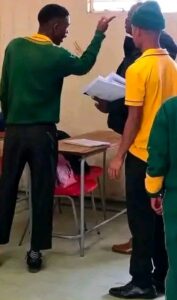
The video has attracted strong reactions from social media users, with many condemning the learner’s alleged behaviour and calling for schools to take disciplinary action.
### Concerns Over Classroom Discipline
The incident has reignited a long-running conversation about learner discipline and the authority of teachers in South African schools.
For many educators and members of the public, the concerning issue extends beyond the actions of one learner. The presence of other pupils who appear to treat the confrontation as entertainment has also raised questions about the culture surrounding classroom discipline.
Some social media users argued that teachers should receive greater institutional support when dealing with serious misconduct, particularly when confrontations become threatening or disruptive.
Teacher organisations and education commentators have previously raised concerns about violence, intimidation and declining morale among educators. They have called for safer school environments where both learners and teachers are protected.
### Broader Social Challenges
The classroom incident has also prompted discussions about the wider social problems affecting young people.
Education observers have frequently linked behavioural challenges in schools to factors such as poverty, unstable communities, family difficulties and exposure to violence. While these circumstances may help explain some behavioural problems, they do not excuse abusive or threatening conduct towards educators.
The end of corporal punishment in South African schools was an important development in protecting learners from physical abuse. However, questions remain about whether schools have sufficient and effective alternatives for dealing with serious disciplinary problems.
https://x.com/athenkosi591/status/2094690809228468596
Teachers are expected to maintain order while following strict rules governing learner discipline. When serious misconduct occurs, educators may have to rely on formal disciplinary procedures, which can take time.
### Impact on Teachers
Repeated incidents of intimidation, verbal abuse and violence can have a serious effect on educators’ mental wellbeing and job satisfaction.
A teacher who constantly fears confrontation may find it increasingly difficult to focus on teaching. Classroom disruptions can also reduce valuable learning time and affect other learners who are trying to concentrate on their studies.
There are also concerns about the long-term impact on the teaching profession. If educators feel unsupported or unsafe, experienced teachers may consider leaving, while young professionals may become discouraged from entering the field.
Ultimately, the viral video has become more than just another trending social media clip. It has highlighted difficult questions about respect, accountability and safety in South African classrooms.
Schools, parents, learners, education authorities and communities all have a role to play in creating environments where teachers can teach without fear and learners can receive quality education in a safe and respectful setting.
About the Author