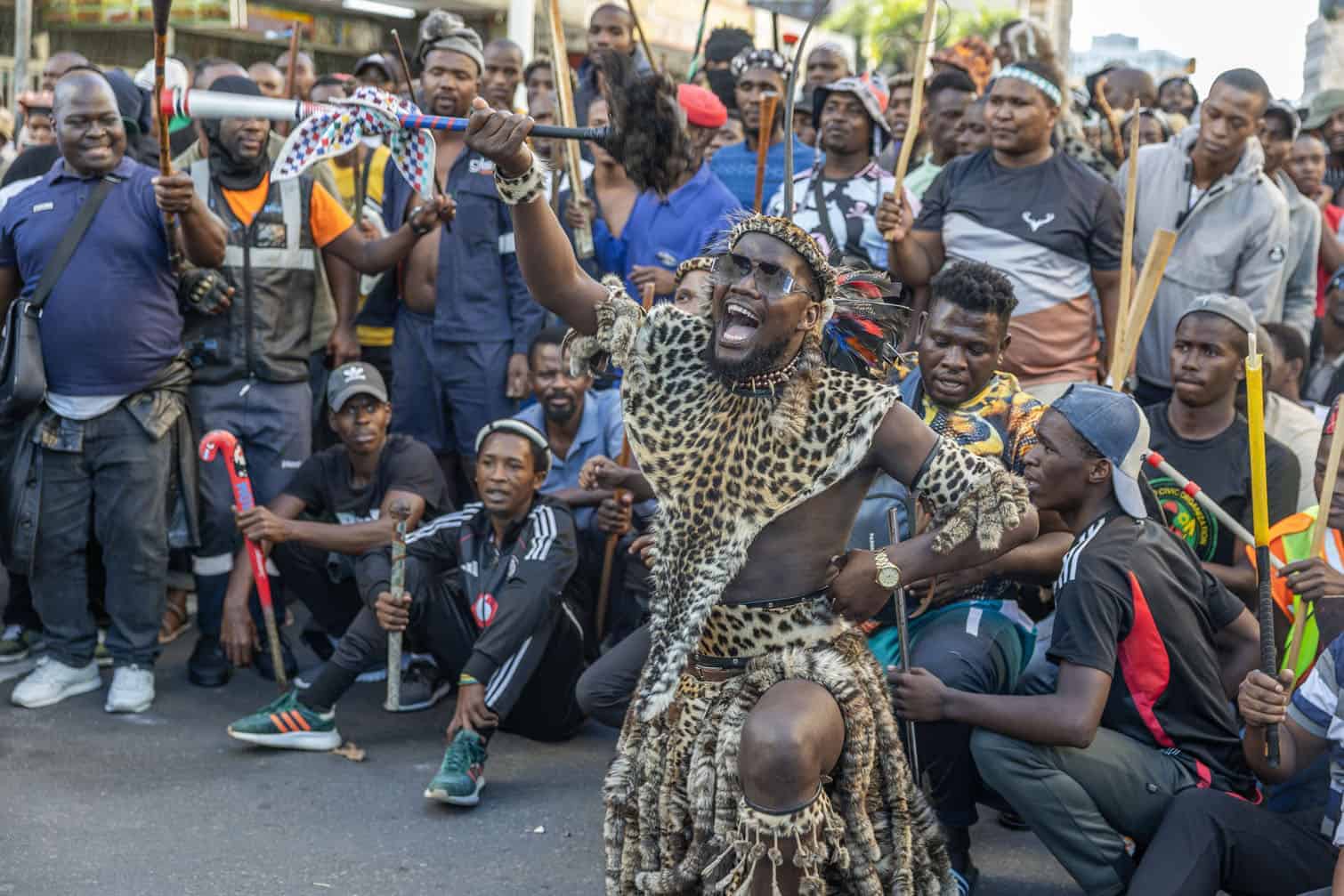
A protester dressed in traditional attired gestures during a protest march against undocumented migrants in Durban on May 6, 2026. (Photo by RAJESH JANTILAL / AFP)
Malawi has announced the introduction of a voluntary repatriation programme for its citizens living in South Africa, following growing concerns over escalating incidents of violence targeting foreign nationals in parts of the country.
The announcement was made by Malawi’s Ministry of Foreign Affairs, which confirmed that the initiative is designed to assist Malawian nationals who have independently requested support to return home. Authorities stressed that the programme is not compulsory and will only apply to individuals who formally seek assistance through official consular channels.
The ministry said it is currently finalising logistical arrangements for the exercise, with further details expected to be communicated once planning is completed in collaboration with relevant stakeholders. The focus, it noted, is to ensure a safe and organised return process for those affected.
Malawian diplomatic missions in South Africa, including the High Commission in Pretoria and the Consulate-General in Johannesburg, have been actively engaging with community leaders. These discussions aim to assess the conditions faced by Malawian nationals and to provide necessary consular assistance where needed.
According to the ministry, Malawi has been closely monitoring reports of unrest involving vigilante-style demonstrations and attacks on African migrants in various regions of South Africa. Officials indicated that diplomatic talks have been ongoing with South African authorities in response to the situation.
The ministry further noted that discussions between the two governments have been constructive, describing engagements as cordial and focused on addressing safety concerns affecting foreign communities. It also acknowledged efforts by South African authorities to respond to the unrest and maintain public order.
In recent months, South Africa has experienced a rise in anti-migrant protests across several provinces, including KwaZulu-Natal, Gauteng, and the Eastern Cape. Some demonstrations have required police intervention after groups reportedly targeted foreign nationals and their property.
Certain protest movements have argued that their actions are driven by concerns over undocumented migration, claiming it places pressure on employment opportunities and public services. Some organisers have also issued public calls for undocumented foreign nationals to leave the country within set deadlines, intensifying tensions in affected areas.
The situation has led to heightened concern among several African diplomatic missions, with reports that some representatives have boycotted official events in South Africa due to safety fears for their citizens.
In some areas affected by unrest, foreign nationals have reportedly been displaced, with others seeking temporary refuge at police stations as a result of violence or intimidation. Law enforcement authorities have continued to monitor developments and respond to incidents as they arise.
Community organisations and human rights observers have raised concerns about the impact of the ongoing tensions, warning that continued unrest could further strain relations between migrant communities and local residents.
The Malawian government emphasised that its voluntary repatriation programme is a precautionary and humanitarian response aimed at safeguarding its citizens. It reiterated its commitment to maintaining diplomatic engagement with South African authorities while ensuring the welfare of Malawians living abroad.
Citizens who wish to participate in the programme have been urged to register with consular offices, while authorities continue to assess the situation and provide updates as conditions evolve.
About the Author