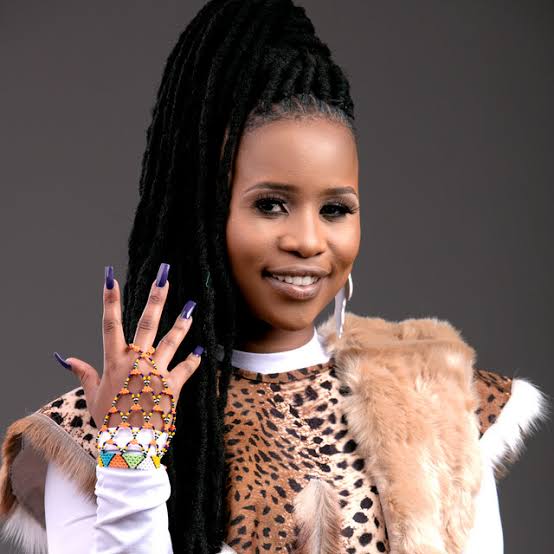

Romanda Hombir, who was recently crowned Miss World South Africa 2026, has become the subject of widespread discussion on social media after questions were raised about her nationality. The beauty queen, who won the prestigious title on 11 July 2026, is now at the centre of an online debate that has divided South Africans, with many defending her while others continue to question her background.
Hombir was crowned during a glamorous ceremony held at the Barnyard Theatre in Menlyn, Pretoria. The event, organised by the Miss African Beauty South Africa organisation under the leadership of former beauty queen Bokang Montjane-Tshabalala, also featured the Miss African Beauty Universe 2026 competition. Following her victory, Hombir earned the honour of representing South Africa at the Miss World 2026 pageant, which is expected to take place in Vietnam later this year.

However, instead of celebrating her achievement, much of the public conversation shifted toward her surname. The debate gained momentum after a social media blog account shared a video of Hombir and questioned whether “Hombir” is a South African surname. The post suggested that pageant organisers should explain why individuals allegedly perceived as non-South African were allowed to compete.
The comments quickly sparked heated discussions across various social media platforms. While some users agreed that organisers should clarify the eligibility requirements for contestants, many others criticised the debate, describing it as unnecessary and discriminatory.
Some social media users argued that South Africa’s diversity means not every surname will be familiar to everyone. Others pointed out that citizenship and identity should not be judged solely by a person’s surname.
One commenter suggested that if people wanted pageants to focus on different cultural groups, separate competitions could be created to celebrate the country’s various ethnic communities. Another user dismissed the criticism entirely, saying it was unfair to question someone simply because their surname was unfamiliar.
https://x.com/i/status/2079317818521096365
Several people also warned that judging individuals based on their names encourages tribalism and xenophobia rather than national unity. They argued that South Africa’s multicultural society includes citizens with surnames influenced by different languages, cultures and family histories.
Others came to Hombir’s defence by claiming she was born and raised in KwaNyamazane, Mpumalanga, and that her family background reflects a blend of Swati, Zulu and German heritage. Although these claims circulated widely online, no official statement has been released by pageant organisers addressing the controversy.
Some social media users called on the Miss World South Africa organisers to publicly clarify the competition’s eligibility rules to put an end to the speculation. Others insisted that Hombir’s victory should be celebrated based on her achievements rather than questioned because of her surname.
The debate comes at a time when discussions around nationality, identity and belonging have become increasingly prominent in South Africa. As a result, Hombir’s victory has become more than a pageant success story, evolving into a broader conversation about diversity, inclusion and how South Africans define national identity.
Despite the ongoing online controversy, Romanda Hombir remains Miss World South Africa 2026 and is preparing to represent the country on the international stage. Many supporters hope the focus will soon return to her role as an ambassador for South Africa rather than the speculation surrounding her surname.
About the Author