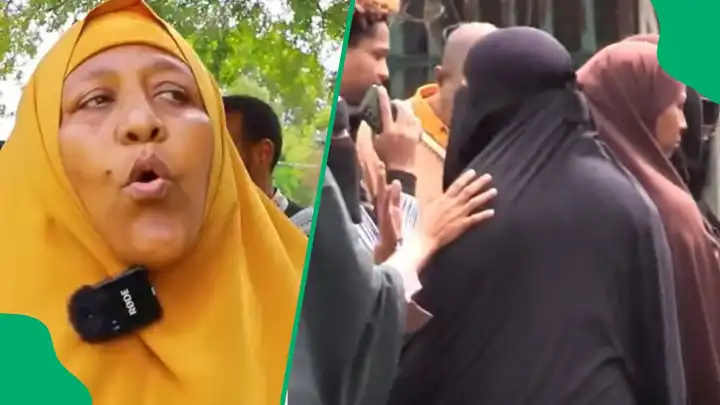
A heartbreaking video of a Somali refugee woman appealing to the South African government has ignited widespread debate about access to social grants and the treatment of foreign nationals in the country. The clip, shared online on 30 April 2026, shows the woman standing outside a SASSA office alongside members of her community, visibly distressed after her grant payments were abruptly stopped.
In the video, she questions how she is expected to comply with new requirements, asking: “At this minute, where will I get a green ID?” Her frustration stems from the sudden demand for a South African green barcoded ID, which she says was never previously required. According to her, she and others in the Somali refugee community had been receiving grants legally using valid refugee permits, but were recently told that these documents were no longer sufficient.
The woman revealed that her grant has been suspended for seven months, leaving her struggling to provide for her children. She emphasised that many refugees depend on this financial support to survive, particularly those raising families and sending children to school. Her plea called on the Department of Home Affairs and relevant authorities to intervene, warning that the situation is pushing vulnerable families deeper into hardship.
https://x.com/i/status/2049884813750833635
Refugee permits in South Africa are typically valid for four years and allow individuals to live, work, and access essential services legally. Under current government guidelines, recognised refugees are entitled to apply for social assistance, including the Child Support Grant, Disability Grant, Older Persons Grant, and the Social Relief of Distress (SRD) grant. To qualify, applicants must pass a means test and present valid documentation, usually a refugee identity document with a 13-digit number. A South African ID is not officially listed as a requirement for refugees applying for these grants.
The sudden shift in documentation requirements has therefore raised serious questions. It remains unclear why some SASSA offices are now reportedly requesting green IDs from refugee applicants, despite existing policies suggesting otherwise. The lack of communication about such a change has added to the confusion and frustration within affected communities.
Online reactions to the viral video have been mixed, with many South Africans expressing strong opinions. Some questioned how foreign nationals were able to access social grants in the first place, arguing that such benefits should prioritise citizens. Others compared the situation to whether South Africans would receive similar support in other countries. A number of commenters suggested that refugees should seek assistance from their home governments or embassies instead.
However, the debate also highlights broader tensions around immigration, resource allocation, and social welfare in South Africa. As economic pressures continue to affect many citizens, issues involving government support for non-citizens often become highly contentious.
This incident comes amid ongoing national discussions about immigration policies and refugee rights. While South Africa has long been recognised for its relatively progressive stance on asylum seekers, cases like this reveal gaps in implementation and communication at the ground level.
For the Somali refugee community and others in similar situations, the hope is for clarity and consistency in how policies are applied. Until then, many remain uncertain about their access to essential support, as calls grow louder for government intervention and clearer guidelines.
About the Author