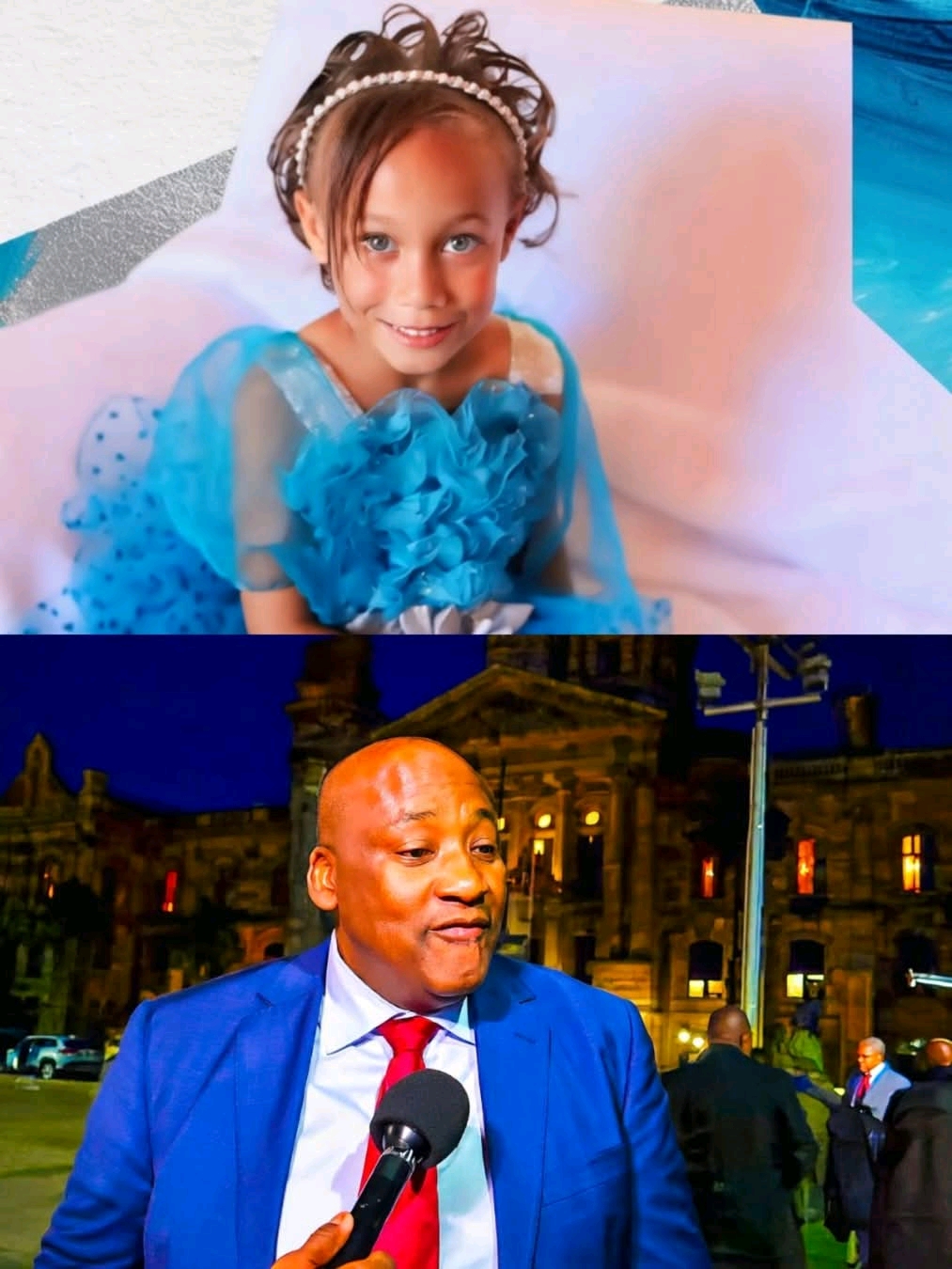
Minister of Sport, Arts and Culture **Gayton McKenzie** has sparked renewed debate after claiming that missing child **Joslin Smith** is still alive, promising to present evidence to authorities. His remarks have drawn mixed reactions from South Africans, with many questioning both the timing and credibility of his claims.
McKenzie made the announcement during the launch of the Joslin Smith Foundation at the Dial Rock Community Hall in Saldanha Bay on 15 March 2026. The event took place more than two years after Joslin’s disappearance, which shocked the country and led to an extensive investigation and high-profile court case.

Joslin was last seen on 19 February 2024 outside her home in Middlepos, Saldanha Bay. At the time, she was reportedly with her mother’s boyfriend, Jacquin “Boeta” Appollis, who claimed she went out to play and never returned. The case later resulted in the arrest and conviction of Appollis, Joslin’s mother Kelly Smith, and Steveno “Steffie” van Rhyn. The trio were found guilty of kidnapping and human trafficking and were sentenced to life imprisonment.
Despite the convictions, McKenzie insists the case may not be closed. He stated that he intends to approach the Minister of Police directly with what he believes is new and crucial information. According to him, this evidence suggests that Joslin may still be alive.
While he did not disclose the exact nature of the evidence, McKenzie explained that it stems from investigations conducted by private investigators he had hired. He claimed that during a recent raid on a property linked to individuals connected to the case, new developments emerged. One of those individuals, Lourencia “Renz” Lombaard—who previously turned state witness—allegedly indicated a willingness to reveal the truth about Joslin’s whereabouts following a domestic dispute.
McKenzie said this development strengthened his belief that the young girl is still alive. He also emphasized that he would bypass standard police channels and present the information directly to the minister, whom he described as trustworthy.
However, his claims have been met with widespread skepticism. Many South Africans took to social media to question why he had not already shared the information with investigating officers. Others raised concerns about the delay in presenting such potentially critical evidence, suggesting that withholding it could hinder justice.
Some critics accused McKenzie of seeking attention or political gain, while others argued that any new information should be handled strictly through official law enforcement processes. A few even suggested that failing to report evidence promptly could amount to obstruction of justice.
This is not the first time McKenzie has been involved in the case. Since Joslin’s disappearance, he has been actively engaged, even hosting a prayer service in 2024 and offering a R1 million reward for information. He also pledged to use his salary to establish the Joslin Smith Foundation, aimed at supporting efforts to find missing children.
The case remains one of the most heartbreaking in recent South African history, and McKenzie’s latest claims have reignited both hope and frustration. While some cling to the possibility that Joslin may still be alive, others are calling for transparency and proper legal procedures to ensure that justice is fully served.
About the Author