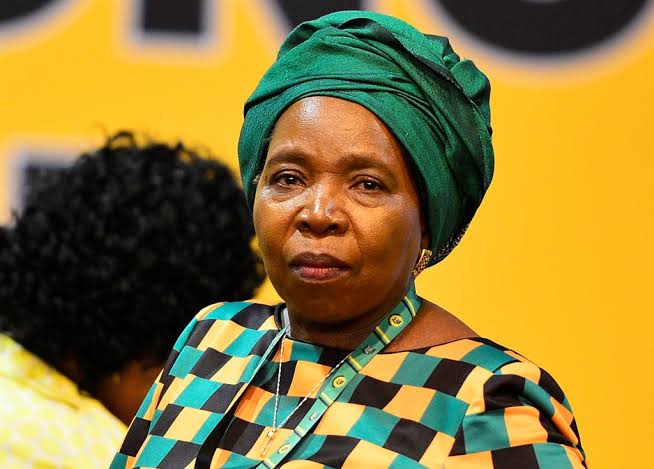
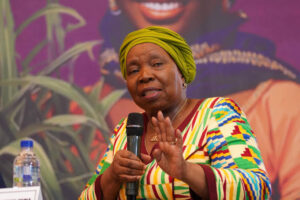
Former African Union chairperson and politician Nkosazana Dlamini-Zuma has dismissed claims that deporting undocumented foreign nationals would meaningfully reduce South Africa’s unemployment levels, arguing that the country’s job crisis is driven by deeper structural issues.
Speaking amid growing public debate over illegal immigration and rising protests in parts of the country, Dlamini-Zuma said blaming foreign nationals for unemployment oversimplifies a complex economic challenge. She warned that even if undocumented migrants were removed, South Africa would still face high joblessness due to slow economic growth and a shortage of relevant skills.
Her remarks come as tensions escalate across several provinces, with protests led by groups calling for stricter immigration enforcement. Demonstrators argue that undocumented migrants place pressure on public services, compete for scarce jobs, and contribute to rising unemployment among South Africans. Some marches have also demanded tighter border control, changes to asylum policies, and action against employers hiring undocumented workers.
However, Dlamini-Zuma, a former Home Affairs minister, stressed that illegal migration should be managed through legal systems rather than hostility or mass removals. She highlighted African Union protocols on free movement of people, noting that while such agreements exist, they are not fully implemented because most countries have not ratified them.
According to her, regulated migration pathways are essential. She argued that undocumented movement should be addressed through enforcement of existing laws, but cautioned against using migration as a scapegoat for economic frustration.
Dlamini-Zuma also pointed to South Africa’s worsening labour market conditions. Statistics South Africa recently reported that the unemployment rate rose to 32.7% in early 2026, with hundreds of thousands of jobs lost in the formal economy. She said this trend reflects deeper economic weaknesses rather than the presence of foreign workers.
She added that many unemployed South Africans lack the technical and vocational skills required by modern industries. In her view, this skills mismatch limits job creation even when opportunities exist. She referenced the need for a “skills revolution,” similar to initiatives outlined in African development frameworks, to better align education and training with labour market demands.
Dlamini-Zuma also shared observations from international skills programmes she had visited, noting examples where young people were trained in practical fields such as electronics repair, renewable energy installation, and drone maintenance. She said such programmes demonstrate how targeted training can create employment and entrepreneurship opportunities.
Her comments were echoed in parts by other government officials addressing the immigration debate. Defence Minister Angie Motshekga recently urged calm during protests, acknowledging citizens’ right to demonstrate while warning against violence and intimidation of migrants.
Justice and Constitutional Development Minister Mmamoloko Kubayi also stated that government operations against undocumented migration are ongoing, citing regular enforcement activities and cooperation between departments.
Meanwhile, anti-immigration groups continue to mobilise nationwide demonstrations, with some threatening a coordinated shutdown if their demands are not met. Authorities have called for orderly protests and warned against unlawful conduct, while reaffirming that migration management remains an ongoing state responsibility.
As debate continues, Dlamini-Zuma maintained that South Africa’s unemployment challenges require economic growth, improved education outcomes, and better skills development rather than attributing blame to foreign nationals alone.
About the Author