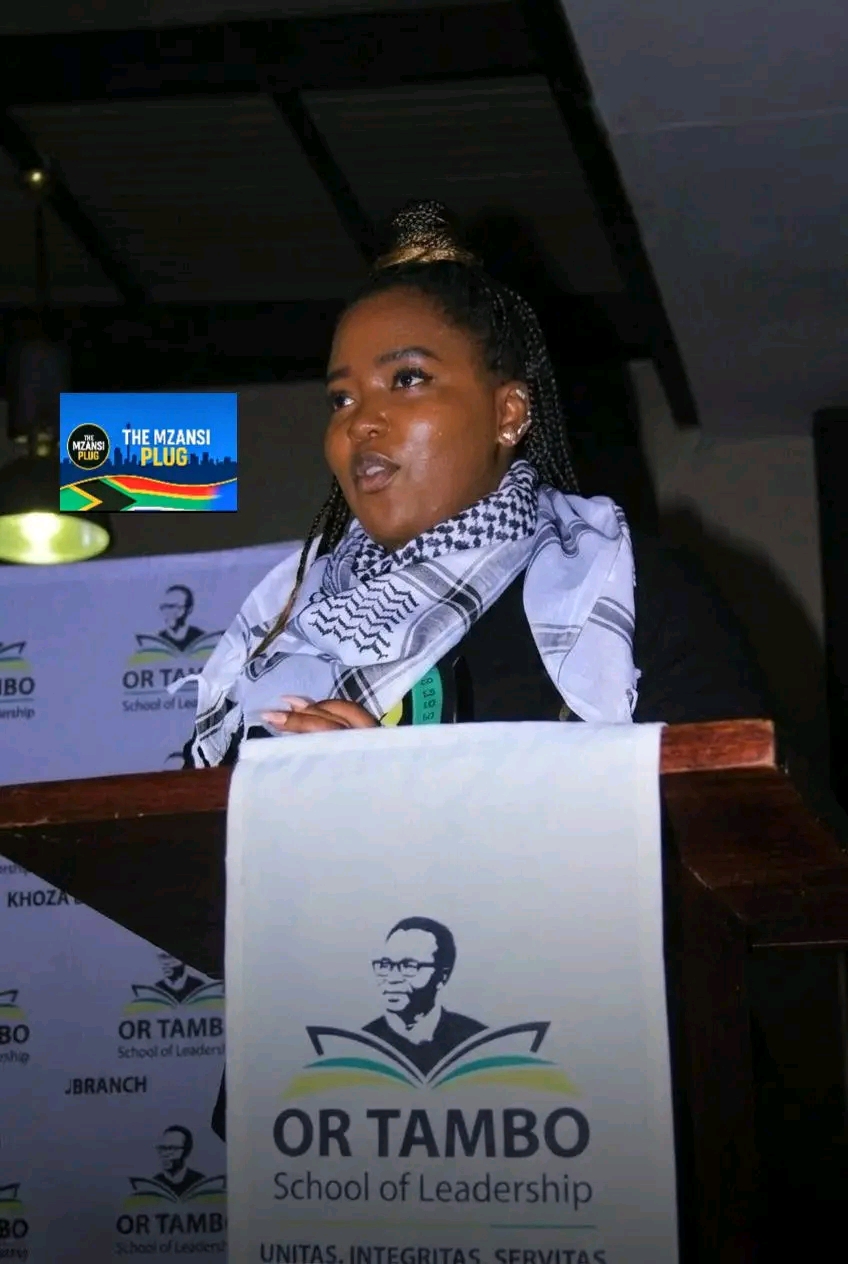
Jacob Zuma’s daughter, Thuthukile Zuma, has ignited a nationwide online storm after sharing her views on immigration, identity, and inequality in South Africa, triggering both strong support and sharp criticism across social media platforms.
The 37-year-old, who is the youngest daughter of former President Jacob Zuma and politician Nkosazana Dlamini-Zuma, posted her comments on X (formerly Twitter) on 12 June 2026. Her statement quickly went viral, drawing attention amid ongoing national debates about undocumented migration and economic inequality in South Africa.
At the centre of the controversy was her bold assertion: “No African is illegal in Africa.” Zuma argued that while people may be undocumented, they should not be labelled as “illegal,” a term she believes dehumanises African migrants and distracts from deeper structural issues affecting the continent.
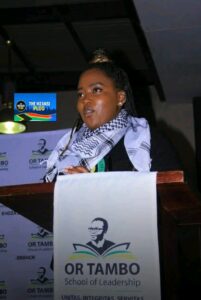
Her comments immediately divided public opinion. Supporters praised her for highlighting issues of inequality, poverty, and systemic exclusion, while critics accused her of being insensitive to South Africa’s rising unemployment and strained public resources.
Zuma further intensified the debate by linking immigration discussions to broader economic challenges. She argued that even if foreign nationals were removed from the country, South Africa would still face serious problems such as land inequality, joblessness, and limited access to economic opportunities.
According to her, the country’s core struggles are not caused by foreign nationals but by long-standing structural imbalances. She pointed to disparities in land ownership and economic power, claiming that inequality remains deeply rooted in South African society.
In one of her widely circulated posts, she posed a provocative question to her followers: if people were truly able to live, work, and access opportunities freely, would they still be concerned about who serves them in restaurants or holds informal jobs? The comment further fueled online debate, with many interpreting it as a critique of economic privilege and social division.
Zuma also rejected the idea that African migrants should be blamed for South Africa’s socio-economic challenges, insisting that poverty and unemployment existed long before current migration patterns intensified. Her remarks were widely shared, with users across platforms debating whether her stance was realistic, idealistic, or politically charged.
Beyond the controversy, Thuthukile Zuma is known for her background in public service. She previously served as chief of staff to the Minister of Telecommunications and Postal Services, Siyabonga Cwele, and made headlines as one of the youngest individuals to head a minister’s office in South Africa. She has also been an active member of the African National Congress (ANC), despite her father’s involvement in the uMkhonto weSizwe Party.
The debate was further complicated by contrasting political voices. Former President Jacob Zuma has previously expressed support for stricter views on foreign nationals, questioning their role in local economic spaces and supporting concerns raised in anti-immigration protests. This contrast between father and daughter has added another layer of public interest to the ongoing discussion.
As tensions over immigration continue to rise in South Africa, Thuthukile Zuma’s comments have once again highlighted the country’s deep divisions on identity, economic justice, and belonging. Whether seen as a call for African unity or a controversial political statement, her remarks have undeniably placed her at the centre of a heated national conversation.
About the Author