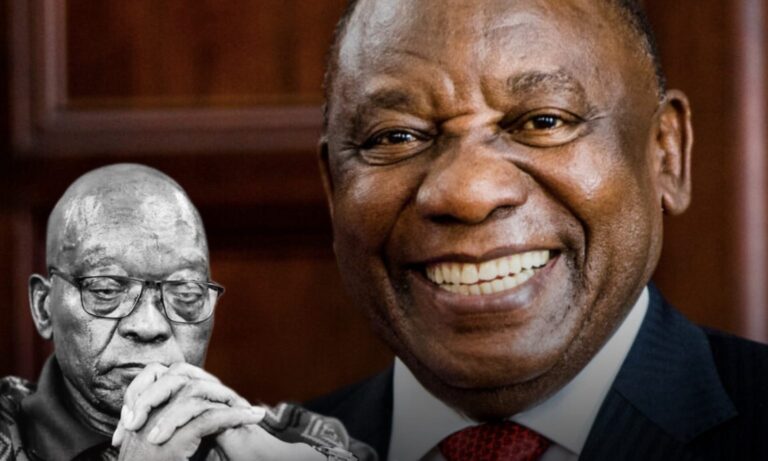
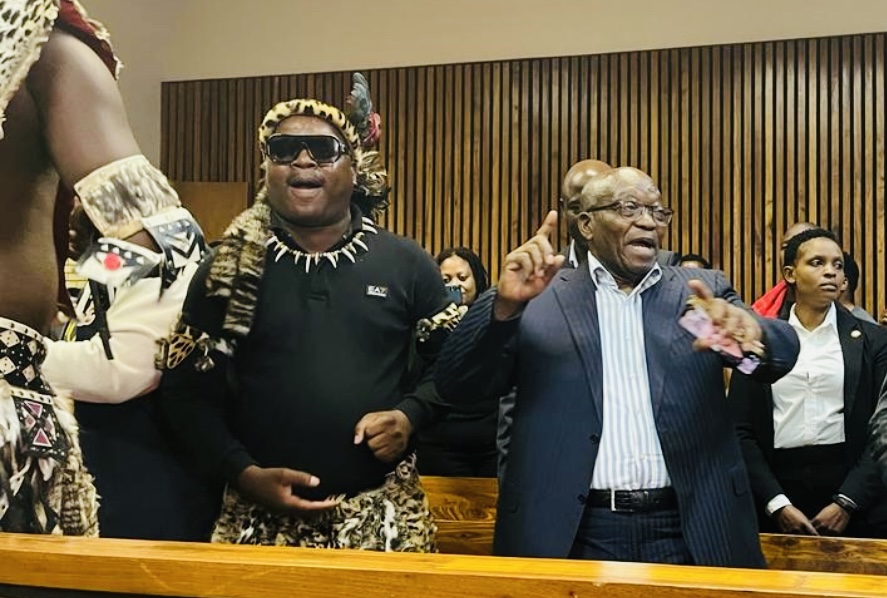
Former South African President Jacob Zuma has found himself at the centre of a heated public debate after a video call between him and controversial activist Ngizwe Mchunu surfaced on social media. The clip, which quickly gained traction online, has triggered mixed reactions from South Africans, with some defending Zuma while others questioned his association with the outspoken Ibhinca Nation leader.
The video, shared on social media platform X, shows Zuma and Mchunu engaged in a conversation conducted in isiZulu. Their discussion covered several sensitive issues currently dominating public discourse, including illegal immigration, the recent destruction of Mchunu’s home, and concerns surrounding the coronation of a Nigerian traditional leader in the Eastern Cape.
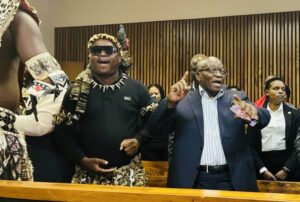
During the conversation, Zuma expressed sympathy for Mchunu following the burning of his homestead. The activist’s property was reportedly destroyed during recent tensions linked to anti-illegal immigration demonstrations that have drawn national attention. Zuma assured Mchunu that he intended to visit him personally and assess the situation facing his family.
While discussing immigration, Zuma reportedly emphasized the importance of following the law. He acknowledged concerns about undocumented foreign nationals living in South Africa but cautioned citizens against taking matters into their own hands through violence or intimidation. His comments highlighted the need for authorities to address immigration challenges through legal channels rather than through public unrest.
The former president also voiced support for cultural concerns raised by traditional leaders who opposed the installation of a Nigerian king in South Africa. Mchunu and his supporters had travelled to the Eastern Cape to protest the coronation, arguing that it raised questions about cultural and traditional leadership structures within the country.
The video immediately sparked widespread reactions online. Critics argued that Zuma’s willingness to engage with Mchunu could be interpreted as support for anti-immigration campaigns that have generated controversy across the country. Some social media users suggested that the conversation revealed a closer political relationship between the two figures than many had previously assumed.
However, others rushed to Zuma’s defence, arguing that the video had been taken out of context. Supporters maintained that the former president was merely showing compassion to someone whose home had been destroyed and that there was nothing inappropriate about the discussion. Several users pointed out that Zuma’s comments specifically discouraged violence and promoted lawful solutions to immigration-related concerns.
The debate quickly spread across social media platforms, with users offering sharply contrasting opinions. While some described the interaction as disappointing and politically troubling, others questioned why Zuma was being criticised for expressing sympathy and engaging in dialogue.
The controversy once again highlights how issues surrounding immigration, traditional leadership, and political influence remain deeply divisive in South Africa. It also demonstrates how public figures continue to face intense scrutiny over their associations and public statements.
As discussions continue online, the video has become yet another example of how a brief social media clip can ignite national conversations and expose the differing views that exist among South Africans on some of the country’s most sensitive issues.
About the Author